What Is Advertising Flag Hardware Used For?
Advertising Flag Hardware includes the poles, bases, connectors, and fittings that keep promotional flags upright and visible. It is used at storefronts, trade shows, sporting events, and outdoor promotions. The right setup helps a flag remain steady, move freely in a light breeze, and attract attention without obstructing nearby walkways. Small details matter: a loose connector can twist the fabric, while an undersized base may shift on a smooth floor.
Because no source was supplied, the quotation below is illustrative, not a verified statement from a real expert. A fictional signage specialist, Alex Morgan, might put it this way: “Good flag hardware is easy to overlook—until a loose fitting or unstable base makes the display fail.” This reflects a practical point, not a product guarantee. Site conditions, flag dimensions, and installation choices all affect performance.
This introduction leads into the main uses of Advertising Flag Hardware, including supporting different flag shapes, securing displays indoors or outdoors, and simplifying setup and transport. Buyers should check compatibility between the flag, pole, and base before use. They should also inspect fittings for wear and follow the manufacturer’s setup guidance. A compact base may suit a calm indoor showroom. A busy entrance can need a different solution. There is no single setup for every site, and that is easy to underestimate.
What Advertising Flag Hardware Includes
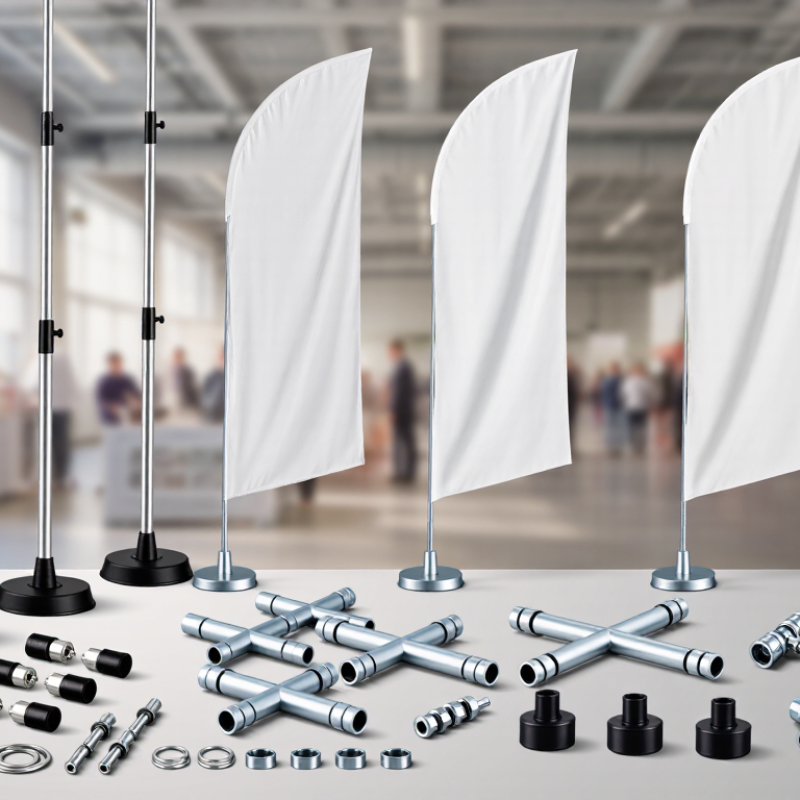
Advertising flag hardware is the supporting system that holds a fabric flag upright and helps it stay visible outdoors. It commonly includes a pole, pole connectors, a top crossbar or sleeve fitting, and a base suited to the display surface. The Outdoor Advertising Association of America reported that U.S. out-of-home advertising revenue reached $9.1 billion in 2023. That figure reflects the scale of outdoor promotion, not sales of flag hardware specifically.
The pole may use lightweight aluminum or flexible fiberglass sections that fit together for transport. A crossbar keeps a rectangular flag spread, while a sleeve-style fitting lets a feather flag follow the pole’s shape. On grass or soil, a ground stake anchors the assembly. Indoors or on pavement, a weighted base provides support; some kits also include a water-fillable base, carry bag, or rotating connector. Small parts matter. A loose connector can make an otherwise well-assembled flag lean or shift.
Hardware choice depends on flag size, location, and setup frequency. Check that the pole length matches the flag’s sleeve or attachment points, and follow the manufacturer’s stated wind limits. There is no universal base that suits every surface. A compact base is easier to carry, but may feel less stable in exposed areas. That trade-off is easy to overlook when planning only around appearance.
How Advertising Flag Hardware Supports Flag Display
Advertising flag hardware turns a printed flag into a display that can stand upright and stay visible. Pole sections support the fabric, while a sleeve or top pocket connects the flag to the frame. A flexible pole can help create the curved shape common in feather-style displays. Small details matter.
The base keeps the assembly in place and should suit the surface. A flat plate may work well indoors, while a ground spike can anchor a flag in suitable soil. On hard flooring, check that the base sits level and does not obstruct foot traffic. The right fit depends on the flag’s size, location, and expected conditions; no single setup works everywhere.
Hardware also affects how the flag moves. A loose connector can let the fabric sag or twist, making a message harder to read. Before display, check that pole sections are fully joined and fabric edges are not caught. In breezy conditions, take the flag down if it begins to strain or lean. Not every setup looks perfect. A base may feel bulky, or a flag may rotate toward a wall. Adjusting its position can help, but regular inspection remains important.
Common Uses of Advertising Flag Hardware
What Is Advertising Flag Hardware Used For?
Common Uses of Advertising Flag Hardware
Advertising flag hardware includes poles, crossbars, ground spikes, and weighted bases. It helps display fabric flags outside shops, at pop-up stalls, and beside temporary promotions. A flexible pole can keep a flag visible above parked cars. A flat base suits smooth indoor floors, while a ground spike holds the display on grass. Hardware choice matters: a base that is too light may tip in gusty weather.
At trade shows and community events, flags can mark entrances, registration desks, or product areas. They also help visitors spot a booth across a busy aisle. The Outdoor Advertising Association of America reported U.S. out-of-home advertising revenue of $9.1 billion in 2023. This figure covers the wider advertising sector, not flag hardware specifically, but it shows continued investment in physical visibility. Flags are not a substitute for clear signs. A crowded layout can still confuse people.
Tips: Match the base to the surface and expected wind. Check pole joints before each event, and keep fabric clear of walkways. Small details matter. I have seen a neatly printed flag become hard to notice when placed behind a table or too close to other displays. Try the setup from a visitor’s viewpoint, then adjust the height and spacing.
Where Advertising Flag Hardware Is Used
Advertising flag hardware is used to position temporary messages where people move, pause, or make decisions. At shop entrances, a ground spike can secure a flag in soil or turf. On paved sidewalks, a cross base with a water weight can provide a practical alternative. Small details matter.
Retailers use flag systems near storefronts to highlight seasonal displays or guide visitors toward an entrance. At trade shows, compact bases help exhibitors mark booth edges without taking up much floor space. Sports venues, campuses, and outdoor events use flags to identify gathering points or direct foot traffic. Keep bases clear of doorways and walking routes. Not every site fits.
Hardware choice depends on surface, wind exposure, and how often the display must be moved. A lightweight base may suit an indoor exhibition, but feel unstable outdoors. The Outdoor Advertising Association of America’s 2023 OOH Revenue Report recorded $9.1 billion in U.S. out-of-home advertising revenue, up 2.1% from 2022. This figure describes the wider OOH market, not flag hardware specifically. It offers context, not proof that every flag placement performs well. A site visit can reveal practical issues, though measurements are sometimes missed.
What Is Advertising Flag Hardware Used For?
Advertising flag hardware secures a flag in place. The right mounting option depends on the surface and installation location.
This chart shows typical hardware suitability by installation surface, not sales or market-share data. A value of 1 means the hardware is commonly suitable; 0 means it is not a typical fit. Always check the flag system and site requirements before installation.
Factors to Consider When Choosing Flag Hardware
Advertising flags rely on more than fabric and print; the pole, connector, and base determine how steadily they stand. When choosing hardware, match the system to the flag’s height, shape, and installation surface. A narrow pole may flex visibly in gusts, while an undersized base can shift on smooth pavement. Small details matter.
Wind deserves careful attention. The American Society of Civil Engineers’ ASCE/SEI 7-22 standard calculates wind pressure using wind speed squared, so local exposure and expected gusts can change hardware requirements substantially.
Check the manufacturer’s rated conditions, anchoring method, and replacement-part availability before buying. The Outdoor Advertising Association of America reported U.S. out-of-home advertising revenue of $9.1 billion in 2023; that figure reflects the medium’s scale, not a guarantee that any flag setup will perform well.
For practical selection, prioritize verified load guidance over appearance alone. I would not rely on a catalog photo to judge stability; it rarely shows the base on uneven ground.
Inspect connectors for wear, and confirm that the pole can be removed without tools if frequent transport matters.