What Is the Best LED High Bay Light for 2026?
Choosing the best Led High Bay Light for 2026 starts with the space, not the product label. A 30-foot warehouse aisle needs different optics from a wide-open workshop. Ceiling height, rack layout, dust, temperature, and operating hours all shape the right choice. Small details matter. A beam that looks bright on a product page may leave shadows between storage racks.
Efficiency claims need context. The U.S. Department of Energy’s report, Energy Savings Forecast of Solid-State Lighting in General Illumination Applications, examines how LED adoption and performance affect energy use. DOE’s LED lighting guidance also reports that LEDs use at least 75% less energy and last up to 25 times longer than incandescent lighting. That comparison is broad, not a direct high-bay fixture ranking. For real purchasing decisions, compare tested luminaire efficacy, delivered lumens, warranty terms, and light distribution. Check whether the product appears on the DesignLights Consortium Qualified Products List, and review photometric files before matching fixtures to a layout.
There is no single winner for every building. A high-output fixture can waste energy if its beam spills beyond work areas. Controls may improve savings, but only when sensors suit the mounting height and workflow. This guide compares practical options for 2026, including light quality, durability, installation, and total operating cost. The figures help. Yet field conditions can still surprise us, so treat published specifications as a starting point, not a promise.
What Defines an LED High Bay Light in 2026?
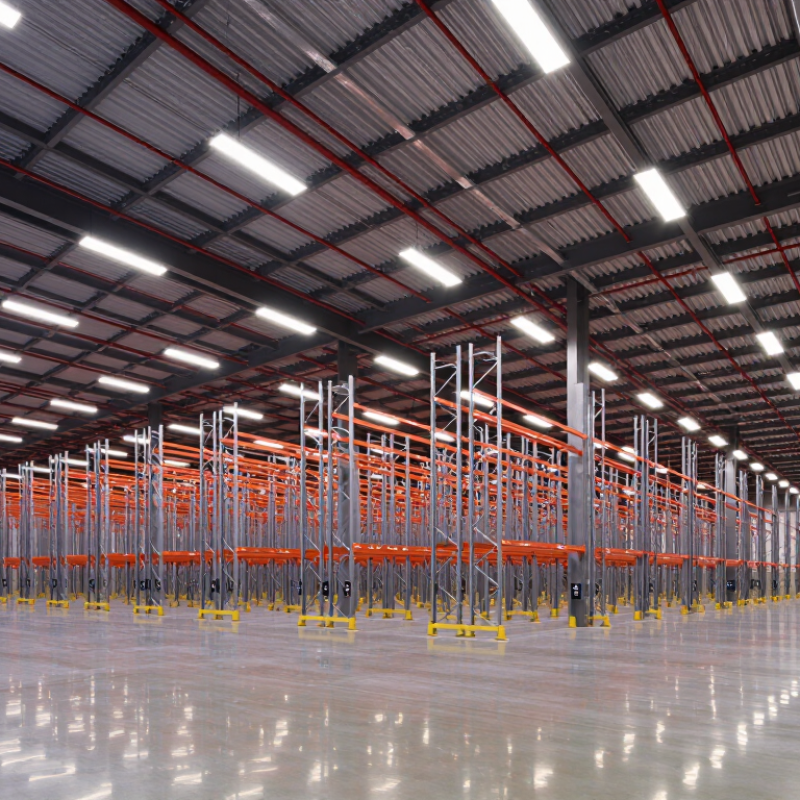
In 2026, an LED high bay is a ceiling-mounted luminaire designed for tall spaces, commonly around 20 feet or higher. Warehouses, gyms, and manufacturing floors need more than a powerful light source. They need controlled distribution that reaches the floor without leaving dark aisles or creating harsh glare. Mounting height matters. A fixture that works over a loading bay may feel painfully bright above a workbench.
LED technology helps explain why high bays have become standard. The U.S. Department of Energy’s Energy Saver guidance says LEDs use at least 75% less energy and can last up to 25 times longer than incandescent lighting. Those figures are useful context, not a guarantee for every high-bay installation. Actual performance depends on operating hours, temperature, driver quality, and maintenance. Check delivered lumens and efficacy, rather than comparing wattage alone.
A suitable 2026 fixture should also manage heat, offer a distribution pattern matched to the ceiling and aisle layout, and support practical controls such as occupancy sensing or dimming. Look for a published photometric file and verify light levels at the work surface. That detail is easy to overlook. I would also question any claim of “maintenance-free” operation; even durable LEDs can suffer driver failure or collect dust. The definition is not just a bright lamp. It is a system designed to deliver usable, consistent light at height.
Which Specifications Matter Most When Choosing One?
For a 2026 high-bay light, start with delivered lumens and efficacy, not wattage alone. A practical shortlist threshold is around 140 lumens per watt, but that figure does not guarantee good light. Check the photometric report and IES file: they show where the light lands on the floor, not just how bright the fixture sounds on paper. A narrow beam can leave dark aisles; a wide beam may waste light on shelving.
Distribution matters. So does glare. Match the beam pattern to ceiling height and aisle layout, then compare the manufacturer’s spacing plan with the actual room. Choose a suitable color temperature and a CRI of 80 or higher for general industrial work. For inspection tasks, higher color fidelity may help. DOE’s Energy Saver guidance says LEDs use at least 75% less energy and last up to 25 times longer than incandescent lighting; that broad comparison supports LED efficiency, but it does not predict a specific high-bay fixture’s service life.
Check driver quality, thermal rating, dimming compatibility, and sensor options. Ask for tested photometric data, such as an IES LM-79 report, rather than relying on a marketing sheet. Verify the fixture’s operating-temperature range against the heat near the ceiling. A spec sheet can still mislead. I would also compare glare and flicker in the actual space; those details are easy to overlook, and the “best” specification can feel wrong once the lights are installed.
How Do Ceiling Height and Facility Use Shape the Choice?
Ceiling height changes what “best” means in a high bay light. Start with the room. At 12–16 feet, a wider beam can spread light across workbenches and aisles without creating bright spots. At 20 feet or higher, a narrower beam may deliver more useful light to the floor. Not just watts. Compare fixture output and photometric data, then check the layout against the tasks people perform below.
Facility use matters just as much. A warehouse with tall racks needs clear vertical visibility, while a workshop may need even light over benches and machinery. For inspection areas, reduce glare on polished surfaces and screens. In dusty or damp spaces, check the fixture’s environmental rating and plan for cleaning access. More output is not automatically better; excessive brightness can cause eye strain and leave dark patches beside intense pools of light.
Before choosing, note the mounting height, aisle width, ceiling obstructions, and hours of operation. Dimming or occupancy controls may help in areas used intermittently, but they need to suit the site’s routine. A common planning mistake is measuring only the floor. Small detail, big effect. I would also recheck the corners and rack faces after installation, because a tidy lighting plan can still miss them.
How Do Energy Costs, Controls, and Lifespan Compare?
For 2026, the best LED high bay light is the one that lowers operating costs without sacrificing useful, even illumination. Compare fixture efficacy, measured in lumens per watt, and check that the light distribution suits your ceiling height and aisle layout. A 150-watt fixture replacing a 400-watt older light could save about 750 kilowatt-hours yearly if it runs 3,000 hours. Actual savings depend on the old fixture, electricity rates, and operating schedule. Small differences add up across a warehouse.
Tips: Check your utility bill and operating hours before estimating payback. Ask for a photometric layout, not just a lumen rating.
Controls can reduce energy use further, but only where dimming or occupancy sensing fits the work. A sensor that switches off lights over a busy loading area may frustrate staff; one in a storage aisle can make sense. Confirm compatibility between controls and drivers, and test sensor coverage on site. I would not assume every control saves money.
Compare lifespan claims carefully. L70 indicates when output is expected to reach 70 percent of its initial level, not when a fixture suddenly fails. Heat, dust, and frequent switching can affect performance. Review the rated hours, warranty terms, and driver details together. A longer rating looks reassuring, but installation conditions matter more than the number alone. Keep a few maintenance records; they reveal whether the estimate matches reality.
What Is the Best LED High Bay Light for 2026?
Compare modeled annual energy cost and rated service life for a 400 W metal-halide high bay, a standard 150 W LED high bay, and a 150 W LED high bay with occupancy and daylight controls.
Takeaway: An efficient LED high bay with compatible controls can reduce energy use while offering a longer rated life than a typical metal-halide fixture. Actual savings depend on electricity rates, operating hours, control settings, and the space. Estimates assume 12 operating hours per day, 365 days per year, electricity at $0.12 per kWh, and 25% energy savings from controls compared with the standard LED. Rated lifespans are illustrative; check product specifications and verify light output and distribution for your application.
How Can You Match a High Bay Light to Your Space?
Matching a high bay light starts with the room, not a wattage chart. Measure ceiling height, floor area, and spacing between fixtures. A 30-foot warehouse aisle needs a different beam pattern from a 16-foot workshop. Narrow optics can direct light onto tall racks, while wider distributions suit open work areas. Check the fixture’s photometric data and compare predicted illuminance with the needs of each task. Measure the ceiling. Note dark corners, reflective floors, and machinery shadows; they can change the result more than expected.
Next, consider how the space operates. Warehouses with long shifts may benefit from occupancy sensors and daylight dimming, but shelving can affect sensor coverage. For dusty or damp areas, verify the fixture’s ingress protection rating and temperature range. Compare delivered lumens, efficacy, glare control, color rendering, and warranty terms—not just input watts. Accurate color may matter at a workbench; uniform light may matter more in a storage aisle. I still prefer a small on-site trial for unusual layouts. It can reveal glare or dark patches before you install dozens of fixtures.