China Top 10 Fly Screen Manufacturers for Global Buyers
Global buyers sourcing a fly screen need more than a low quotation. They need consistent mesh, dependable frames, clear specifications, and communication that continues after sampling. Small details matter. A loose corner joint or sagging mesh can turn a promising order into costly rework.
China has a broad supplier base, from factories focused on standard fiberglass rolls to manufacturers offering pleated, retractable, aluminum, or made-to-measure systems. This guide introduces ten manufacturers for buyers comparing product range, production capability, customization, export experience, and quality-control practices. These are useful screening points, not a guarantee that one supplier fits every project. Product catalogs can look similar. Factory capability may not be.
Use the profiles as a starting point, then verify current details directly. Ask for material and mesh specifications, sample lead times, packaging information, inspection procedures, and references for comparable export orders. Where possible, compare samples under the same conditions, including frame dimensions and installation method. A few questions can reveal gaps. Still, no directory can replace an audit or careful contract review. Supplier information changes, and public claims may need independent confirmation. Treat the shortlist as a working tool, not a final verdict. With that caution, global buyers can make a more informed comparison and choose a partner whose fly screen products match their market, budget, and service expectations.
Understanding Fly Screens and Their Main Product Types
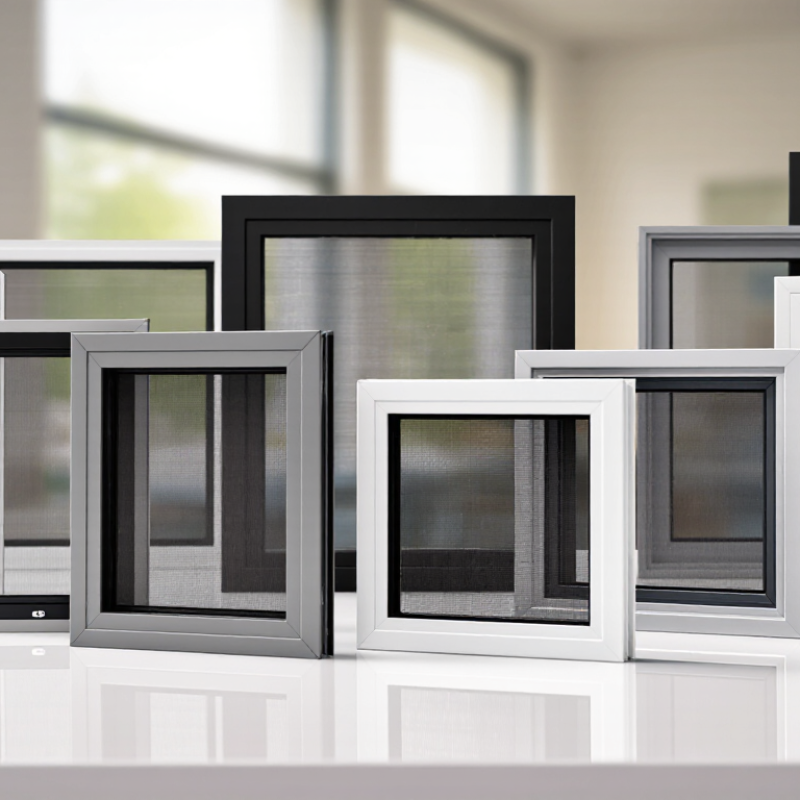
A fly screen forms a breathable barrier across a window or doorway. It helps keep flying insects outside while letting air and daylight through. The mesh and frame both affect everyday performance. No screen suits every opening.
Fixed screens work well for windows that rarely need access. Hinged screens swing open like light doors, making them practical for busy entrances. Sliding screens travel along tracks and suit patio doors with limited clearance. Roller screens retract into a slim cassette when not in use, but poor alignment can cause uneven winding. Pleated screens fold sideways for wide openings, though dust can collect in the folds. Magnetic screens are easy to remove; check that their edges meet tightly.
Fiberglass mesh resists rust and is commonly used for ordinary windows. Aluminum mesh feels firmer, but dents may remain after pressure. For homes with pets, heavier mesh may last longer, yet thicker strands can reduce airflow. A finer weave may catch smaller insects, but it can dim a room. There is no perfect mesh. Measure the opening at several points, since older frames may not be square. Compare mesh openness, frame depth, operation, and replacement-part availability—not just the material name.
How to Evaluate Fly Screen Manufacturers in China
China Top 10 Fly Screen Manufacturers for Global Buyers
How to Evaluate Fly Screen Manufacturers in China
Choose a manufacturer by your project’s conditions, not catalog photos. Ask for mesh-opening measurements, wire or yarn specifications, coating details, and dimensional tolerances. The World Health Organization’s World Malaria Report 2024 estimated 263 million malaria cases worldwide in 2023. That figure is not evidence that ordinary fly screens prevent malaria; confirm that the product suits your intended use and local environment.
Request traceable test reports from an independent laboratory. Check whether the tested sample matches the product being quoted. ASTM D3656 provides a technical reference for insect screening, but a certificate alone does not prove consistent production. Ask how the factory checks mesh size, frame fit, corrosion resistance, and quality between batches. A tidy showroom sample can still hide uneven openings. I would verify this in person or through a qualified inspector, though that adds time and cost.
Tips: Order samples and measure the openings with a mesh gauge. Fit one panel into a frame, then check for gaps, loose corners, and visible coating defects. Ask for recent inspection records and clarify how rejected goods are handled. Small details matter.
Profiles of 10 Chinese Fly Screen Manufacturers
Chinese fly-screen manufacturers often serve different project needs. One focuses on standard fiberglass mesh for residential windows. Another produces aluminum mesh for stronger airflow and firmer handling. A third offers stainless-steel mesh for settings where durability matters. A fourth specializes in pleated screens that fold neatly beside a doorway. A fifth builds retractable systems with spring-loaded rollers. Details matter. Ask how each maker controls mesh tension and checks frame dimensions.
Other supplier profiles include a maker of magnetic screens for quick installation, a producer of custom-color frames, and a workshop handling oversized patio openings. One factory may focus on insect screens for sliding doors, while another supplies replacement mesh and repair components. These profiles are starting points, not proof of quality. Request close-up photos of corner joints, sample mesh, and written size tolerances. Check whether the quoted opening size refers to the frame or the finished screen. A glossy catalog is not evidence. I would also compare sample orders with production batches; small differences can appear, and buyers sometimes overlook them. Ask for test records when performance claims are important.
Comparing Products, Certifications, and Export Capabilities
A useful comparison of fly screen manufacturers starts with the product, not the catalogue cover.
Check mesh material, opening size, frame dimensions, and finish options. Fiberglass mesh is flexible and easy to fit, while aluminum mesh offers a firmer feel. For humid or coastal sites, ask how frames and coatings handle prolonged exposure. Small details matter.
Certification claims need careful reading.
Request current test reports and confirm that each document covers the exact mesh or finished screen being quoted. A certificate for raw material may not verify a complete assembly. Ask about applicable quality and environmental systems, but check the issuing body, scope, and expiry date. Paperwork can look tidy and still leave gaps.
Export capability is just as practical.
Compare stated lead times, minimum order quantities, packaging, labeling, and experience with your destination market. Ask for carton dimensions and loading plans; these affect freight costs and damage risk. Request a sample packed like a real shipment, not a showroom piece. Not always possible. Still, it reveals useful weaknesses. No checklist catches every mismatch, so record agreed specifications and inspection criteria before production begins.
How Global Buyers Can Choose and Source a Supplier
Choosing a fly-screen supplier starts with a measurable specification, not a catalogue photo. State the mesh opening, wire or yarn material, frame dimensions, finish, and acceptable tolerances. Request samples cut to production size. Check that corners sit flush and the mesh stays taut after fitting. Small details matter.
Ask suppliers for test reports covering tensile strength, corrosion resistance, UV exposure, and dimensional consistency. Confirm the test method, laboratory, date, and production batch. The World Bank’s 2023 Logistics Performance Index assessed 139 economies across six dimensions, including customs, infrastructure, tracking, and timeliness. Buyers can use these measures to question delivery plans, not just compare freight quotes. A lower price may come with longer lead times or weaker traceability.
Before placing a large order, request a pilot batch and inspect it under real installation conditions. Compare mesh apertures with the intended use; tighter mesh can reduce airflow. Check packaging too: crushed frame profiles are costly to sort after arrival. This process is not flawless. A strong sample does not guarantee every shipment will match, so agree on inspection rules and corrective actions in writing. World Bank, Logistics Performance Index 2023.
China Top 10 Fly Screen Manufacturers for Global Buyers — How to Choose and Source a Supplier
Compare representative nominal mesh counts when assessing fly-screen samples. Higher counts mean more strands per inch, but do not alone determine insect protection or airflow; wire diameter and opening size also matter.
These are representative mesh configurations, not a ranking or a guarantee of supplier specifications. Ask suppliers for the actual aperture size, wire diameter, material, and product sample before ordering.