Locally made
Choosing Double Head Bolts in 2026 is a small decision with serious consequences. One incorrect thread, grade, or length can delay installation or weaken a critical joint. The global fasteners market reflects the scale of this work: Grand View Research valued it at USD 90.43 billion in 2023 and forecast continued growth through 2030. That broad market figure is not a demand forecast for double-ended studs, but it shows why specification and quality control matter across industries.
Start with the joint, not the catalogue. A double-ended stud must match the tapped hole, nut, material, temperature, and service environment. Check thread form and pitch at both ends, usable engagement, overall length, and required strength class. For demanding service, verify the applicable material specification and supporting mill documentation. A shiny finish proves little. Corrosion resistance, coating thickness, and thread fit need evidence.
John H. Bickford’s foundational work on bolted joints offers a useful reminder: joint behavior depends on more than the fastener alone. That principle guides practical selection. A stud that fits the drawing may still fail the application if installation access, preload, or maintenance conditions were overlooked. Measure the installed stack-up. Confirm nut compatibility. Ask suppliers for traceable records, not just a product description. Small details matter.
And assumptions deserve a second look. In 2026, compare documented properties against the actual design requirements before purchase. This guide will help you assess standards, materials, dimensions, coatings, and supplier quality, so your Double Head Bolts fit the joint they are meant to secure.
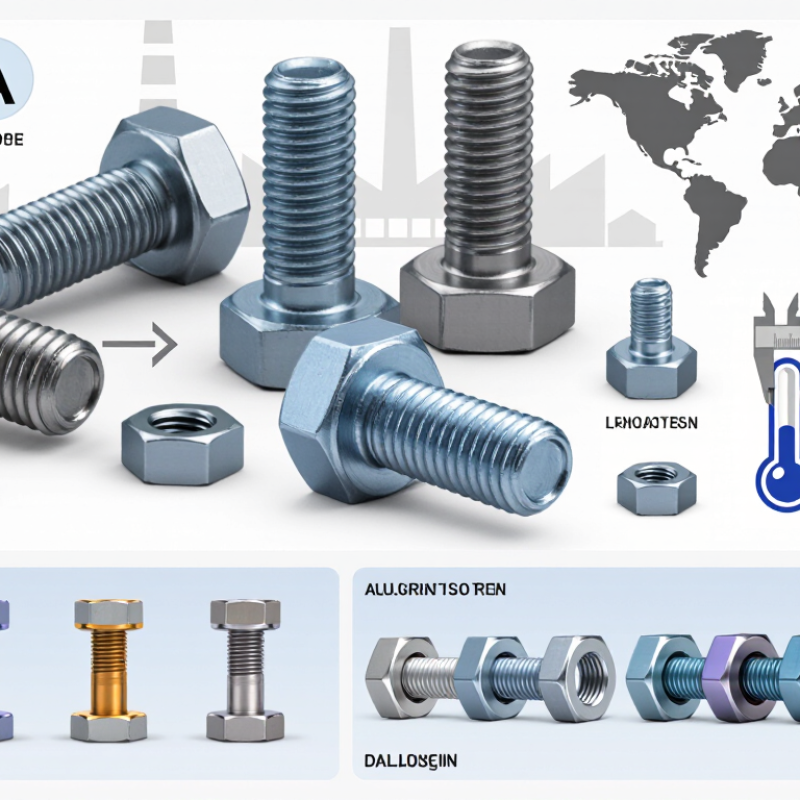
Double-head bolts, often called double-ended studs, have threads at both ends and a plain or reduced-diameter shank between them. One end enters a tapped hole; a nut secures the other. They are common on pipe flanges, pressure vessels, pumps, and engine housings. The arrangement can reduce wear on a threaded component during maintenance because the stud may stay installed while the nut is removed. Small detail. Correct thread engagement and tool clearance still matter.
Choose by service conditions, not diameter alone. Check load, temperature, vibration, corrosion, mating materials, thread pitch, and access for tightening. ASME B16.5 covers NPS 1/2 through NPS 24 flanges, including dimensions, pressure-temperature ratings, materials, and bolting provisions. ASTM A193 covers bolting for elevated-temperature or pressure service; ASTM A320 addresses low-temperature service. Verify the specified grade and applicable standard edition.
Scale is useful context, not a sizing shortcut. World Steel Association’s World Steel in Figures 2025 reports 1.88 billion tonnes of crude steel production in 2024; this is not a double-head-bolt production figure. It does show why “steel” alone is an incomplete specification. Chemistry, heat treatment, and traceable material records affect performance. It is easy to miss the nut: mismatched materials or thread fit can contribute to seizure or loosening, even when the stud itself meets its specification.
| Selection Dimension | What to Check | Typical Applications or Guidance |
|---|---|---|
| Part type | Confirm whether the drawing calls for a double-ended stud, a tap-end stud, or another fastener. These parts are often informally called “double head bolts,” although a stud has no conventional bolt head. | Studs with threads at both ends are commonly used where one end screws into a tapped hole and a nut secures the other end. |
| Application and joint | Identify the connected parts, joint design, access for installation, and whether the fastener must be removed for maintenance. | Common uses include pipe flanges, pressure equipment, machinery housings, and other bolted joints designed for studs. |
| Diameter and thread | Match the nominal diameter, thread series, pitch, and tolerance to the equipment drawing or governing specification. | Unified inch threads are covered by ASME B1.1; ISO metric screw threads are covered by ISO 261 and ISO 965. Do not mix incompatible thread systems. |
| Length and thread engagement | Check overall length, threaded length at each end, the required nut engagement, and the depth of the tapped hole. | For flange joints, select stud length to suit the flange, gasket, nuts, and joint configuration. Use the applicable drawing or flange standard rather than estimating from nominal pipe size alone. |
| Material and temperature | Choose material based on design temperature, pressure, strength requirements, and the surrounding environment. | ASTM A193 Grade B7 is a common alloy-steel bolting material for high-temperature or high-pressure service when permitted by the design. ASTM A193 Grade B8M is a stainless-steel bolting option for applications requiring corrosion resistance; verify its grade and condition for the service. |
| Low-temperature service | Confirm the specified material’s toughness and qualified temperature range. | ASTM A320 Grade L7 is a bolting material specified for low-temperature service. Use the design specification to confirm suitability and required impact testing. |
| Nuts and assembly | Match nuts to the stud material, thread, strength requirements, and service conditions. | ASTM A194 Grade 2H nuts are commonly paired with ASTM A193 Grade B7 studs in many flange applications. Follow the project specification for the exact nut grade and assembly method. |
| Corrosion protection | Consider moisture, chemicals, outdoor exposure, and compatibility with the connected materials. | Options may include suitable stainless steel, protective coatings, or other specified finishes. Coatings can affect thread fit and tightening behavior; confirm compatibility before ordering. |
| Tightening requirements | Use the tightening procedure and lubricant specified for the joint, including any required preload or torque method. | Torque depends on factors such as lubrication, coating, thread condition, and joint design. There is no single torque value suitable for every double-ended stud. |
| Standards and documentation | Check the applicable product, material, dimensional, and project standards; request material test documentation when required. | For flange joints, verify the governing piping or pressure-equipment requirements and the specified stud and nut material grades. Standards and project documents take precedence over general selection guidance. |
Selection reminder: Confirm dimensions, materials, and assembly requirements against the equipment drawing and applicable engineering specification before purchase or installation.