
Get a Quote

How to Choose the Best Black Dressing Table?

Choosing the best Black Dressing Table involves more than matching a dark finish with bedroom furniture. It requires careful attention to size, storage, lighting, materials, and daily use. A matte black surface can create a calm, modern look, while glossy panels may reflect light and reveal fingerprints quickly. Measure the available wall space first. Leave enough room for a chair, drawer movement, and comfortable leg placement.

Industry data supports the growing importance of considered furniture choices. Grand View Research valued the global furniture market at approximately USD 516.6 billion in 2022, with continued growth expected through 2030. Its market analysis identifies online retail, design variety, and changing household preferences as important growth factors. These trends make product comparison easier, but they also create confusion. Similar-looking tables may differ greatly in board density, hardware quality, finish durability, and assembly support. A low price is not always a saving.

This guide will assess practical details that product images often hide. Check whether drawers use smooth runners and whether the tabletop resists cosmetic stains. Examine the mirror’s proportions, cable openings, and available lighting. Sustainability also deserves attention; the Environmental Protection Agency’s furniture guidance highlights material choices, durability, and responsible disposal as meaningful considerations. No single report can determine the perfect dressing table for every room. Personal routines matter. A compact table may suit a small apartment, yet feel restrictive after daily use. The best choice balances appearance, reliable construction, storage needs, and honest expectations.
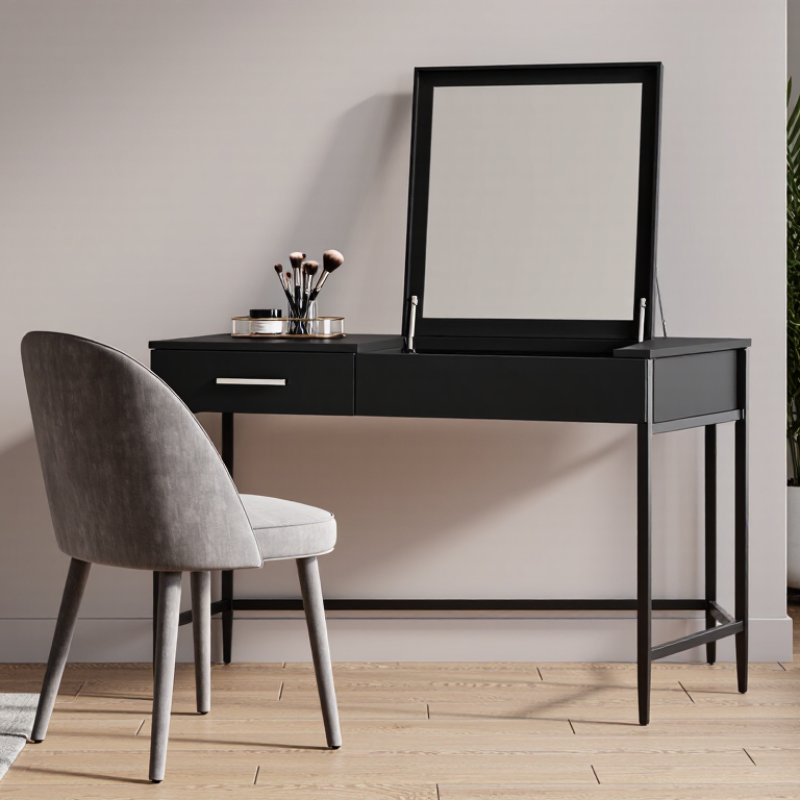
How to Choose the Best Black Dressing Table?

Define Your Space, Storage Needs, and Dressing Table Purpose

How to Choose the Best Black Dressing Table?

Define your space before choosing a black dressing table. Measure the wall, walking clearance, and nearby door swing carefully. Leave at least 70 centimetres for comfortable movement. A narrow room may need a compact table with clean, vertical lines. In a larger bedroom, a wider surface can hold cosmetics, jewellery, and a mirror without feeling crowded. Black furniture absorbs visual attention, so natural light matters. Test the finish beside your wall colour during morning and evening.

Storage needs should guide the design, not appearance alone. Count your daily items, then separate them into frequent and occasional use. Drawers suit small products, while open shelves display baskets or folded towels. I once chose a beautiful table with shallow drawers, and clutter appeared within one week. That mistake changed how I plan furniture. Check drawer depth, smooth movement, and strong hardware before buying. Look for a stable frame and a surface that resists ordinary spills.

The table’s purpose also affects its shape and features. A makeup area needs even lighting and a clear mirror position. A writing corner requires more legroom and a comfortable chair height. If you need both functions, choose a surface wide enough for separation. Keep electrical cables away from cosmetics and leave ventilation around lamps. Small details matter. Your routine may change, so avoid filling every compartment immediately. Leave some empty space for future needs, even if the table looks less complete today.

Compare Black Dressing Table Materials, Finishes, and Construction Quality

Choosing a black dressing table starts with its material, not its color. Solid wood offers weight, repairability, and visible grain beneath the finish. Engineered wood can perform well when its edges are sealed and panels resist bending. Tap the top lightly. A hollow, drumming sound may indicate a thin core. Check the drawer base, too. It should not sag under folded clothing or toiletries.

Black finishes show dust, fingerprints, and scratches more clearly than pale surfaces. Painted surfaces create a smooth, bold appearance, but chipped corners may reveal a contrasting underlayer. Veneer gives natural texture, although loose edges signal poor bonding. Matte finishes hide small marks better. Gloss reflects light and can make a room feel larger, but it needs frequent wiping. Inspect corners, drawer fronts, and handle areas under bright light. Small bubbles or uneven color may become more noticeable over time.

Construction quality appears in movement. Pull each drawer fully; it should glide without wobbling, scraping, or dropping at the end. Metal runners usually tolerate daily use, while weak plastic guides may become noisy. Examine joints from below. Tight dowels, reinforced corners, and even gaps suggest careful assembly. A mirror connection deserves extra attention. I once chose a beautiful table with a shaky drawer and regretted ignoring that warning. Measure leg clearance and wall space before buying. A pretty finish cannot fix unstable construction, though careful inspection can still miss hidden flaws.

Select the Right Size, Shape, and Layout for Your Room

A black dressing table can anchor a bedroom, but its size must suit the room first. Measure the wall, doorway, and walking route before shopping. Keep about 30 inches of clear space in front, allowing comfortable sitting and drawer access. The National Kitchen & Bath Association recommends generous clearance around vanity areas, though real rooms often demand compromise. I once placed a wide table beside a wardrobe; the drawers opened, but the chair blocked the passage. It looked elegant and worked poorly.

Choose the shape according to movement. A rectangular table suits a long wall and offers useful drawer capacity. A curved or compact design softens a narrow corner. For shared bedrooms, a table between two light sources can reduce harsh facial shadows. The 2024 Houzz & Home Study reported a median spend of about $35,000 for major primary-bathroom renovations, reminding homeowners that coordinated lighting and storage can become expensive after installation begins. Plan them together, even in a bedroom.

Black surfaces reveal dust, fingerprints, and powder more clearly than pale finishes. Matte textures usually feel calmer, while glossy finishes reflect more light and show marks quickly. Check the table at sitting height, not only in photographs. Leave space for a mirror, everyday cosmetics, and cable routing. The layout may need revision. That is normal. A beautiful table that forces sideways movement is still the wrong choice.

Evaluate Storage Features, Mirror Options, and User Convenience

Choosing a black dressing table involves more than matching a room’s color scheme. Storage features should fit your daily routine, not just look impressive in photos. Measure your cosmetics, hair tools, and accessories before choosing drawer sizes. Shallow drawers keep small items visible, while deeper compartments hold bottles and folded towels. A removable divider can prevent brushes from rolling together. I once chose wide drawers without checking their depth. They looked elegant but wasted space.

Mirror options also affect comfort and accuracy. A fixed mirror offers stability, while an adjustable mirror helps with skincare, styling, and different seating positions. Consider the mirror’s height carefully. Your face should remain visible without constant bending or stretching. Soft, even lighting around the mirror is useful, especially in rooms with limited daylight. However, very bright bulbs may distort makeup colors. A simple color-check near a window can reveal this problem.

User convenience depends on small construction details. Smooth drawer runners reduce noise and help prevent sudden closing. Rounded edges feel safer when moving around a narrow bedroom. Leave enough knee space for comfortable sitting. The table should also have a stable back panel and level feet, since uneven floors can cause wobbling. Keep frequently used items within arm’s reach. Less-used products can occupy lower storage. I still find open shelves attractive, but they collect dust quickly and demand more cleaning than expected. Check assembly instructions before buying, because unclear steps can turn a practical piece into a frustrating project.

How to Choose the Best Black Dressing Table? - Evaluate Storage Features, Mirror Options, and User Convenience

Evaluation Dimension Compact Vanity Drawer Vanity Flip-Top Vanity Best Choice for
Typical overall size 80–100 cm W × 35–45 cm D × 72–78 cm H 100–120 cm W × 40–50 cm D × 75–80 cm H 90–110 cm W × 40–50 cm D × 75–80 cm H Matching the table to the available room space
Storage layout One or two small drawers plus an open shelf Three to six drawers, often with mixed drawer sizes One large compartment beneath the lift-up top and one or two drawers Light daily-use storage
Cosmetic organization Best with trays or small containers for separating items Most suitable for separating makeup, skincare, brushes, and accessories Useful for keeping frequently used items hidden under the top Users with many personal-care products
Mirror configuration Usually a separate wall mirror or tabletop mirror Can support a fixed rectangular or tri-fold mirror Integrated mirror concealed beneath the hinged top Flexible mirror placement or a tidy appearance
Mirror visibility Depends on mirror size and installation height Generally provides a wider viewing area Convenient when open; unavailable when the top is closed Choosing between constant access and concealed storage
Lighting compatibility Works with a desk lamp, wall light, or rechargeable light Usually accommodates separate lighting around the mirror Lighting must not obstruct the hinged lid or mirror movement Applying makeup with consistent illumination
Electrical access May include a cable opening; check the product specification Often allows a cable opening or nearby outlet access Cable routing is important because the top opens and closes Using hair dryers, straighteners, or charging devices
User convenience Easy to move and quick to clean Everything can remain arranged in dedicated drawers The surface can be cleared quickly by closing the top Prioritizing everyday speed and neatness
Cleaning requirements Wipe the exposed surface regularly to remove dust and powder Requires cleaning inside drawers as well as on the tabletop The lid helps protect stored items but its hinges need dust removal Selecting a maintenance routine that fits your habits
Recommended seating height A stool or chair with a seat height of about 43–48 cm A chair with a seat height of about 43–48 cm A stool or chair that leaves comfortable knee clearance Maintaining a comfortable sitting posture
Suitable room size Small bedrooms, dressing corners, and apartments Medium or large bedrooms with dedicated storage space Bedrooms where a clean, uncluttered look is important Balancing furniture size with available floor area
Main selection priority Small footprint and simple daily use Maximum organization and easy product access Concealed storage and a multifunctional surface Choosing according to storage volume, mirror preference, and routine

Note: Dimensions are typical planning ranges for residential dressing tables. Always verify the specific product’s measurements, drawer capacity, mirror safety details, assembly requirements, and electrical specifications before purchase.

Check Safety, Maintenance Requirements, Price, and Long-Term Value

Choosing the best black dressing table starts with safety, not appearance. Check whether the frame feels stable when drawers open. The U.S. Consumer Product Safety Commission reported an average of 22,000 furniture tip-over injuries among children under 18 each year from 2018 to 2020. Anchor the table to the wall, especially in homes with children or pets. Rounded corners, smooth drawer stops, and strong hardware also reduce everyday risks.

Maintenance matters because black surfaces reveal fingerprints, dust, and fine scratches quickly. A satin finish is often more forgiving than a high-gloss finish. Use a soft microfiber cloth and diluted mild soap. Avoid abrasive pads and excessive water. The U.S. Environmental Protection Agency reports that indoor concentrations of some pollutants can be two to five times higher than outdoor levels. Choose low-emission materials and ventilate the room after assembly. I once preferred a glossy finish, but daily wiping became irritating.

Price should reflect long-term value, not just the checkout total. Compare board thickness, drawer construction, warranty coverage, replacement hardware, and anchoring equipment. A cheaper table may sag after repeated use. A more expensive model can still disappoint if its coating chips easily. Check the load rating for mirrors and drawers. Consider repairability. That detail is easy to miss. A durable black dressing table should remain stable, cleanable, and visually balanced after years of ordinary use.

How to Choose the Best Black Dressing Table?

Use this practical 100-point framework when comparing black dressing tables. Safety receives the highest weighting because the table should remain stable, support its intended load, and allow secure wall anchoring. Maintenance considers fingerprint visibility, scratch resistance, surface cleaning, and hardware care. Price should be compared with construction quality, while long-term value reflects durability, repairability, storage usefulness, and finish longevity.

Back to top