What is a Strong Base Anion Resin and How is it Used?
The use of strong base anion resin has been transformative in various industries, particularly in water treatment and chemical processing. A recent report by the Global Resin Market Analysis reveals that the strong base anion resin market is projected to grow by 5% annually, driven by increasing environmental regulations. This resin type effectively removes contaminants by exchanging reactive ions, making it vital for achieving purity in water sources.
Dr. Emily Hart, a leading expert in ion exchange technologies, emphasizes, "The efficiency of strong base anion resin is unmatched when it comes to the removal of anionic pollutants." Her insight underlines the significance of this material in maintaining strict environmental standards amidst rising pollution levels.
Despite its advantages, the application of strong base anion resin isn't without challenges. Operating conditions can affect performance, and manufacturers must consider factors like temperature and flow rate. Continuous research is needed to optimize efficiency and durability. In an industry evolving rapidly, we must constantly assess the balance between cost and performance for these essential materials.
What Defines a Strong Base Anion Resin in Water Treatment Applications
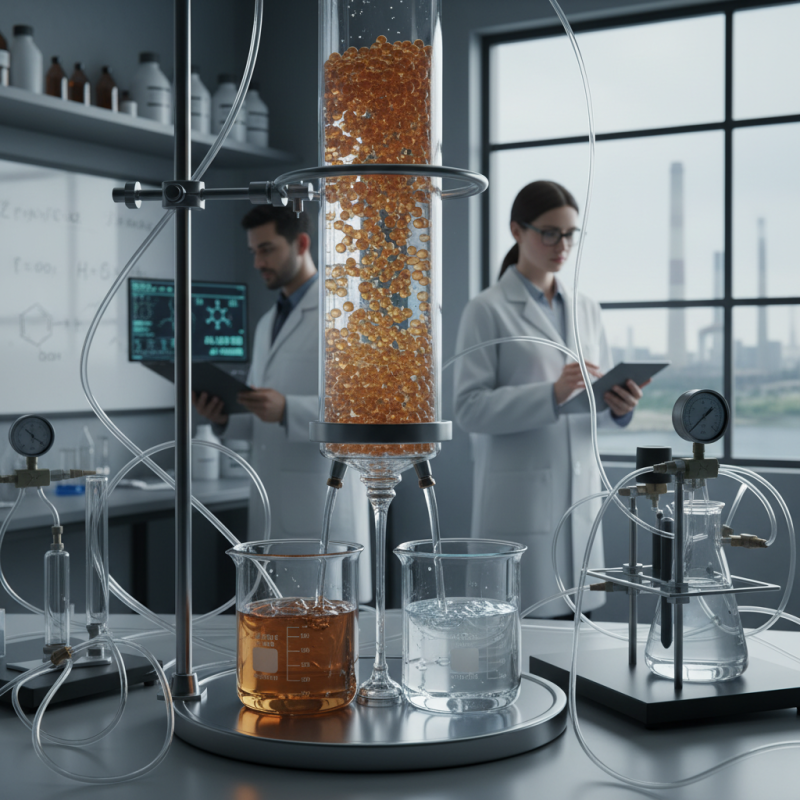
Strong base anion resins play a crucial role in water treatment. These resins are designed to remove negatively charged ions from water. They are essential for processes like deionization and water softening. Their structure allows them to capture anions effectively, making them suitable for various applications.
In water treatment, strong base anion resins operate by exchanging their hydroxide ions with anions in the water. This exchange helps in purifying the water. Common applications include deionizing water for industrial use and removing phosphate from wastewater. The efficiency of these resins can vary based on the specific type of anion present. Understanding the right resin for your needs is vital.
Tip: Regular monitoring of resin performance is essential. Over time, resins can lose their effectiveness. Don't wait for water quality to drop before testing. Another tip is to consider the water's specific composition. Not all resins are created equal. Choosing the wrong type may lead to subpar results. Assess your water before making a decision.
Strong Base Anion Resin Usage in Water Treatment
Key Properties and Chemical Composition of Strong Base Anion Resins
Strong base anion resins are essential in various industrial applications, particularly in water treatment and chemical processing. These resins typically consist of amine groups that positively charge, allowing them to exchange hydroxide ions for negatively charged impurities. Their structure enhances efficiency in ion exchange, making them suitable for environments requiring high capacity and speed.
The chemical composition of strong base anion resins often includes a cross-linked polystyrene matrix. This matrix gives the resin mechanical strength and stability. Data from industry reports indicate that strong base anion resins can achieve exchange capacities exceeding 1.0 meq/mL. This property is vital for achieving effective deionization processes. Notably, variations in cross-link density impact the performance and selectivity of these resins, affecting their suitability for specific applications.
Despite their benefits, challenges exist. For instance, resin fouling can reduce efficiency over time. Periodic regeneration is essential to maintain performance levels. Reports suggest that efficient cleaning processes can restore anion resin capacity by up to 95%. This highlights the need for ongoing monitoring and maintenance, ensuring that the resins function optimally in critical operations.
Common Industrial Applications of Strong Base Anion Resins
Strong base anion resins play a crucial role in various industrial applications. These resins effectively remove anions from solutions, making them essential for water treatment. One notable area of application is in the power generation industry. Water used in boilers must be free of contaminants like sulfate and chloride. According to a 2021 industry report, using strong base anion resins can reduce anion levels by up to 99%, improving boiler efficiency.
In pharmaceutical manufacturing, strong base anion resins are pivotal. They help ensure the purity of water used in drug formulation. Impurities can alter drug effectiveness. A recent study indicated that the application of these resins can result in a 50% reduction in impurities in water intended for injection. This is vital, as even trace contaminants can lead to product recalls and regulatory issues.
Despite their advantages, challenges exist. The resins require periodic regeneration, which can generate waste. Additionally, not all resins have the same performance under varying conditions. A mismatch can lead to insufficient anion removal, affecting end product quality. Continuous monitoring and optimization are essential to maintain efficiency.
What is a Strong Base Anion Resin and How is it Used? - Common Industrial Applications of Strong Base Anion Resins
| Application Area | Description | Benefits |
| Water Treatment | Used in desalination and purification processes to remove anions from water. | Effective removal of contaminants; improves water quality. |
| Wastewater Treatment | Helps in treating industrial effluents by removing harmful anions. | Reduces environmental impact; complies with regulations. |
| Pharmaceuticals | Used in the production of active ingredients to ensure purity. | Enhances product reliability; maintains stringent quality standards. |
| Food and Beverage | Utilized in sugar refining and beverage processing to remove unwanted ions. | Improves taste and quality; extends shelf life. |
| Mining and Metallurgy | Facilitates metal recovery and ore processing by removing impurities. | Increases yield; enhances efficiency of recovery processes. |
Performance Metrics: Efficacy and Regeneration of Anion Resins
Strong base anion resins play a vital role in water treatment processes. They are effective in removing harmful contaminants. Data shows that these resins can achieve removal efficiencies over 95% for certain anions. This high efficacy is crucial for industries aiming to meet strict water quality standards.
Regeneration of these resins is another key performance metric. It's not just about initial performance; how well the resin can be reused is significant. Studies indicate that with proper maintenance, anion resins can be regenerated 10 to 15 times. This cycle is essential for sustainability. However, the regeneration process can be inefficient. It requires careful monitoring and may not always restore full capacity.
Some challenges remain. Over time, resins can experience loss of performance. Factors include fouling and changes in feed water chemistry. Regular assessments are necessary. Without them, the effectiveness can decline significantly. Addressing these issues is critical to ensure long-term use and reliability in various applications. Overall, understanding these metrics helps improve operational strategies in water treatment facilities.
Comparative Analysis: Strong Base vs. Weak Base Anion Resins in Use
In the world of anion resins, strong base and weak base varieties serve distinct purposes. Strong base anion resins are highly efficient at removing specific anions, such as sulfate and nitrate, from water. They operate effectively across a wide pH range. In contrast, weak base anion resins perform well under lower pH levels, targeting different contaminants. Their efficiency can diminish as pH increases, revealing a potential flaw in specific applications.
Analyzing their performance statistics can be revealing. Strong base resins often achieve removal rates exceeding 95% for targeted ions. Meanwhile, weak base resins can struggle to reach 80% in similar conditions. This discrepancy suggests that strong base resins are generally more reliable in critical water treatment scenarios. However, weak base resins have the upper hand in certain organic contaminant applications. The balance between efficiency and operational cost also warrants consideration.
Industry reports indicate that strong base anion resins dominate the market, accounting for around 60% of the sector. This preference highlights their versatility and effectiveness. Nonetheless, some operators may overlook the advantages of weak base resins. They can be more cost-effective for specific contaminants. Rethinking the application strategy could lead to improved outcomes, particularly for those working with variable water qualities.