Locally made
Buying Decorative Flags in bulk looks simple until the cartons arrive. Colors may shift, hems can curl, and outdoor fabric may fade faster than expected. A lower unit price does not always mean a better purchase.
Whitney Smith, a respected vexillologist and founder of the Flag Research Center, once emphasized, “A flag is a symbol, not merely a piece of cloth.” That idea matters when selecting Decorative Flags for retail displays, festivals, hotels, schools, or seasonal promotions. Each flag must communicate clearly while surviving handling, transport, wind, sunlight, and repeated installation.
This guide, “10 Tips for Buying Decorative Flags in Bulk,” focuses on practical decisions before placing a large order. It considers fabric weight, printing quality, stitching, pole compatibility, packaging, minimum order quantities, and delivery schedules. A sample should be inspected in daylight, not only under showroom lighting. Touch the hem. Check the grommets. Compare the printed colors with the approved artwork.
Small details matter.
Buyers should also ask how suppliers manage quality control and replacement claims. Reliable vendors provide clear specifications, consistent communication, and realistic production timelines. Still, even experienced buyers can overlook storage conditions or seasonal demand. That is where careful planning becomes valuable.
The advice ahead is practical, but not perfect. Local weather, installation methods, and customer expectations can change the right choice. Use these tips as a working framework, then test assumptions with samples, measurements, and documented supplier answers. Bulk purchasing rewards preparation. It also exposes weak decisions quickly.
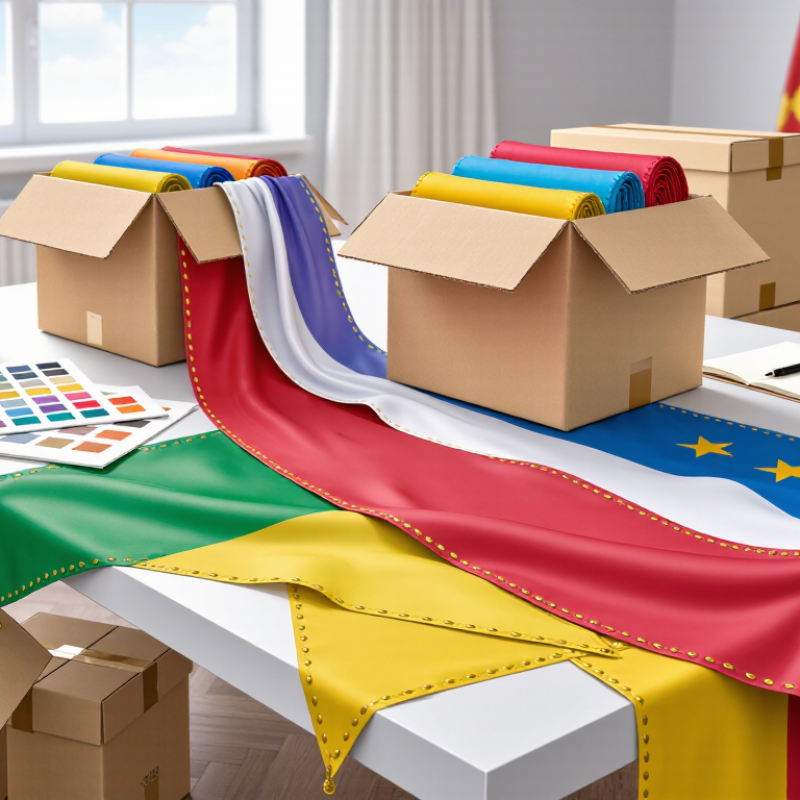
Before buying decorative flags in bulk, identify what each flag must accomplish. A storefront flag should attract pedestrians from the sidewalk. A festival flag should create rhythm across an open space. Indoor flags need lighter fabric, smaller hardware, and cleaner edges. Outdoor displays require stronger stitching, UV-resistant materials, and stable bases.
The setting changes the buying decision. Measure wind exposure, viewing distance, mounting height, and available storage. The Outdoor Advertising Association of America reported that U.S. out-of-home advertising revenue reached about $9.1 billion in 2023. That figure shows how strongly physical visibility still supports public communication. However, a busy display can become visual noise. More flags are not always better.
Match the design to the audience and location. Use high-contrast colors near roads, but choose calmer patterns for hospitality spaces. ASTM weathering practices can help buyers compare fabric testing, although laboratory performance does not perfectly predict local weather. Ask for production samples before ordering hundreds.
I once underestimated how quickly dark fabric absorbed afternoon heat. It looked excellent at delivery, yet the placement needed more shade than expected.
Plan for replacement flags, too. Damage, fading, and changing event layouts can make a perfect bulk order feel wasteful.
When buying decorative flags in bulk, material should match the display environment, not just the budget. Outdoor flags usually need lightweight knitted polyester, because it dries quickly and moves clearly in wind. Indoor banners can use denser polyester or cotton blends for a softer, more premium appearance. Textile Exchange’s 2024 Materials Market Report recorded 124 million tonnes of global fiber production in 2023, with polyester accounting for about 57 percent. That figure explains its wide availability, but it does not prove every polyester fabric will perform well. Ask for fabric weight, tear-strength results, stitching details, and colorfastness testing.
Size changes both visibility and installation safety. For a narrow walkway, a 60-by-90-centimeter flag can add color without blocking movement. Larger roadside displays may require 90-by-150-centimeter panels, reinforced corners, and stronger mounting hardware. Check the pole length, sleeve diameter, and finished flag dimensions together. Measure twice. A mismatch can leave attractive flags unusable. Design also deserves practical testing. Use high-contrast colors, simple lettering, and artwork that remains recognizable from several meters away. The 2023 Sign Research Foundation reports that viewing distance and contrast strongly influence sign readability, although decorative flags are not identical to permanent signs. That limitation matters. Order a physical sample before approving hundreds of pieces, especially when gradients, small text, or dark backgrounds are involved. Keep it washable. Bulk savings mean little when fading, fraying, or difficult installation creates replacement costs.
10 Tips for Buying Decorative Flags in Bulk
Buying decorative flags in bulk requires more than comparing prices. A reliable supplier should explain fabric choices, production timelines, printing methods, and replacement policies clearly. Ask how long they have handled similar orders. Request business references or recent project photos when possible. Clear communication is essential. Slow replies may signal future delays.
Review customization options before approving a design. Confirm flag dimensions, stitching, pole pockets, grommets, colors, and artwork resolution. Ask for a digital proof and a physical sample. A small color difference can change the entire display. Measure twice. Do not assume standard sizes will suit every location. Some suppliers offer flexible layouts, but unusual shapes may increase costs or require stronger seams.
Product quality deserves practical testing. Check fabric weight, edge stitching, color consistency, and resistance to wind and sunlight. Rub printed areas gently with a damp cloth. Inspect whether the seams remain flat. Ask for documented material specifications and quality-control procedures. A low quote may exclude packaging or sample fees. That happened to me once, and the final budget changed. Build time for corrections, because even experienced suppliers can miss a detail. Bulk savings matter, but dependable quality protects the appearance of every flag.
| No. | Evaluation Area | What to Check | Practical Benchmark | Questions for Suppliers | Priority |
|---|---|---|---|---|---|
| 1 | Define the Intended Use | Identify whether the flags are for indoor decoration, outdoor events, retail displays, public spaces, or seasonal campaigns. | Outdoor use generally requires stronger fabric, reinforced stitching, UV resistance, and weather-aware packaging. | Can you recommend a construction suitable for the planned location and expected display period? | High |
| 2 | Compare Fabric Options | Compare polyester, nylon, cotton, and blended fabrics for weight, appearance, drying speed, and durability. | Polyester is commonly selected for durable printed displays; nylon is lightweight and often produces a brighter flying appearance; cotton is generally more suited to indoor decorative use. | What is the fabric composition, weight per square meter, and recommended application? | High |
| 3 | Verify Print Quality | Review color consistency, image sharpness, print coverage, registration accuracy, and front-to-back visibility. | Request a physical pre-production sample or approved proof before authorizing the full order. | Which printing process is used, and how are color tolerances approved for repeat orders? | High |
| 4 | Assess Customization Flexibility | Check available sizes, shapes, hems, sleeves, grommets, hanging loops, double-sided construction, and artwork requirements. | Confirm the finished dimensions, artwork template, safe areas, bleed requirements, and attachment method in writing. | What design formats and production tolerances do you accept for customized flags? | Medium |
| 5 | Inspect Construction Details | Examine hemmed edges, corner reinforcement, thread quality, bar-tack stitching, pole pockets, and attachment points. | Outdoor flags should have secure edge finishing and reinforcement at points exposed to pulling, wind, or repeated handling. | Which areas are reinforced, and what inspection procedure is used for seams and hardware? | High |
| 6 | Request Quality and Safety Documents | Ask for material specifications, colorfastness information, care instructions, and any applicable compliance documentation. | Documents should identify the tested material or finished product, test method, date, and issuing laboratory when testing is claimed. | Which documents apply to this product, and can the records be matched to the supplied material? | High |
| 7 | Evaluate Minimum Order Quantity | Compare minimum order quantities by size, color, artwork, and product configuration. | A low unit price may be less useful if the required quantity is below the minimum or if separate designs trigger additional setup charges. | Is the minimum order applied per design, per size, per color, or across the complete order? | Medium |
| 8 | Calculate Total Landed Cost | Include unit price, sampling, artwork setup, packaging, freight, duties, taxes, and replacement allowances. | Compare suppliers using the same specifications and delivery terms rather than comparing unit prices alone. | Which costs are included, and what charges could be added after artwork approval or shipment? | High |
| 9 | Confirm Production and Delivery Timing | Separate sample time, artwork approval time, production time, quality inspection time, and transit time. | Build a schedule with a written approval deadline and a buffer for transit delays or corrective production. | When does production start, and how will delays or quantity shortages be communicated? | High |
| 10 | Establish Inspection and Replacement Terms | Define acceptable limits for print defects, size variation, stitching problems, missing components, and damaged packaging. | Inspect samples from the shipment promptly and retain photos, counts, packing records, and approved artwork for claim support. | What is the claim period, and what remedy is available for defective, incorrect, or incomplete goods? | High |
Buying Decorative Flags in Bulk: Compare Bulk Pricing, Minimum Orders, and Shipping Terms
Buying decorative flags in bulk requires more than comparing the listed unit price. Ask suppliers for tiered quotes at 50, 100, and 500 pieces. Prices may fall quickly, but setup fees can change the result. Request a written breakdown for fabric, printing, stitching, packaging, and taxes. Small details matter. A low quote may exclude pole sleeves or reinforced edges. I once saw a buyer choose the cheapest offer, then pay more for replacements after windy outdoor use. That mistake was avoidable.
Check the minimum order quantity before approving artwork or samples. Some suppliers accept mixed designs, while others require one design per batch. Confirm whether sample fees apply to the final invoice. Compare production times, too. A fourteen-day estimate may begin after payment, proof approval, or material confirmation. Those dates are not interchangeable. Ask for a physical sample when color accuracy matters. Digital previews can hide muted reds or thin lettering. Keep the approved sample and written specifications for quality checks.
Shipping terms deserve the same attention as product pricing. Compare door-to-door delivery with port, warehouse, or pickup arrangements. Request carton dimensions, gross weight, carrier method, insurance details, and tracking availability. A cheap freight rate is not useful if handling fees appear later. Clarify who manages damaged cartons and how quickly claims must be filed. Add a small schedule buffer. Delays happen, and outdoor events rarely move easily. My own planning has been too optimistic at times. Review three complete quotes, not three unit prices, for a more realistic purchasing decision.
Compare estimated unit pricing, minimum order quantities, and typical shipping windows before placing a bulk order.
Larger orders generally reduce the estimated unit price, but buyers should also confirm minimum order quantities, production lead time, freight terms, packaging, and delivery charges.
Buying decorative flags in bulk requires more than comparing unit prices. I have learned that photos can hide uneven stitching, dull colors, and thin fabric. Request physical samples before approving a large order. Examine each flag under daylight. Check the hem, grommets, seams, and printed edges. Rub the surface gently with a clean white cloth. Some ink may transfer. That detail matters when flags hang near pale walls.
Tip: Compare samples made with the same material and production method listed in your quotation. Measure each flag, then record its weight and finished dimensions. Ask how colors may change after outdoor exposure or washing. A sample can look excellent while the final batch varies slightly. This happens. Keep a signed or digitally confirmed sample reference, including artwork, color codes, fabric type, finishing method, and packaging requirements. Do not rely on memory.
Tip: Confirm every final purchase detail in writing before payment. State the quantity, acceptable measurement tolerance, delivery date, inspection process, replacement terms, and shipping address. Clarify whether setup accessories are included. Count the sample’s grommets. It sounds minor. Missing hardware can delay an event and increase costs. Request production photos or a pre-shipment inspection when practical. I once overlooked carton labeling, which complicated distribution. A checklist would have prevented it. Leave room for honest discussion if a detail remains uncertain.