Locally made
Choosing the right Stainless Steel Coil Manufacturer in 2026 requires more than comparing prices. Coil buyers must examine grade consistency, surface finish, thickness tolerance, production capacity, and delivery reliability. These details affect stamping lines, fabrication costs, corrosion resistance, and final product quality. A bright 2B surface may suit household equipment, while a demanding chemical application may require different finishing and testing standards.
Historical perspective still matters. Metallurgist Harry Brearley, widely recognized as a pioneer of stainless steel, described his discovery as “a steel that did not rust.” That simple observation shaped an industry. Today, manufacturers must prove performance through laboratory testing, heat certificates, traceability systems, and recognized quality certifications. Experience also matters when mills manage difficult grades such as 316L, duplex stainless steel, or high-nickel alloys.
This guide reviews ten leading manufacturers for 2026. The evaluation considers product range, coil dimensions, technical support, export experience, sustainability practices, and customer feedback. It also considers practical issues, including minimum order quantities and response times. These factors are often overlooked.
No ranking is perfectly universal. A large global mill may not suit a smaller buyer needing flexible production. A lower price may hide longer lead times or inconsistent flatness. That is why this list should support careful supplier verification, not replace it. Buyers should request current test reports, confirm applicable standards, inspect sample material, and discuss warranty terms before signing contracts. Quality begins before the coil arrives.
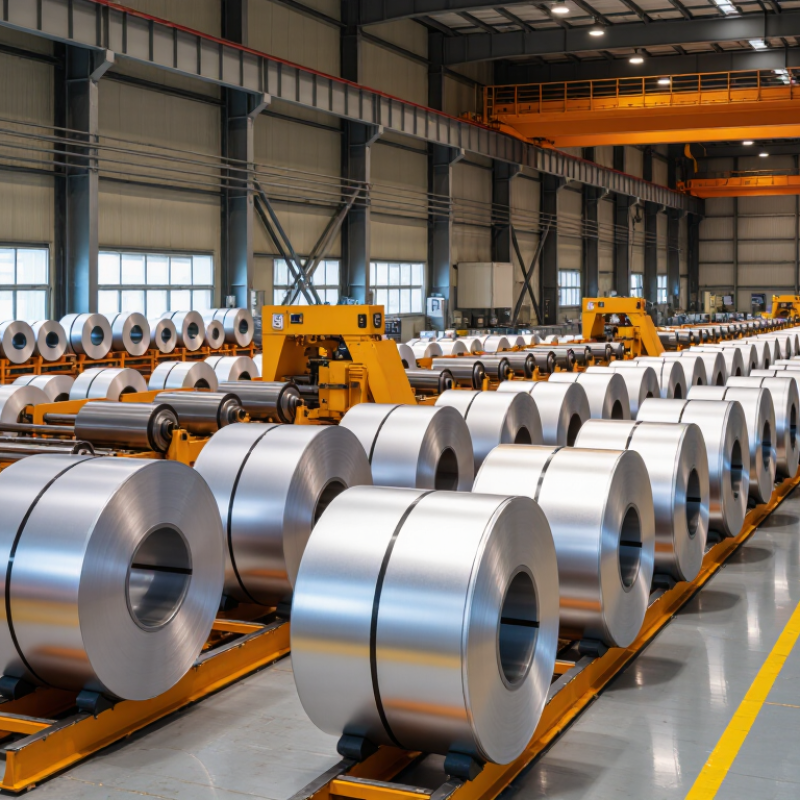
What Defines a Leading Stainless Steel Coil Manufacturer in 2026
A leading stainless steel coil manufacturer combines stable production with verifiable technical control. The ISSF Stainless Steel in Figures 2024 report recorded approximately 58.4 million tonnes of global crude stainless steel production in 2023. That scale increases buyer choice, but it also raises quality risks. A serious manufacturer should publish mill certificates, heat numbers, chemical composition, tensile results, and dimensional tolerances. Each coil should remain traceable from melting to slitting, with records linked to the delivery batch.
Consistency matters on the factory floor. Buyers should inspect surface brightness, edge condition, flatness, and thickness variation under real production lighting. ASTM or EN compliance alone is not enough. Practical testing, independent audits, and clear corrective-action reports reveal more. Lead-time data should also reflect actual shipments, not optimistic quotations. Small delays can stop a stamping line.
Environmental evidence now shapes supplier credibility. World Steel Association reporting indicates that the steel sector produces roughly 7–9% of global carbon dioxide emissions. Therefore, credible manufacturers should disclose energy use, recycled content, emissions boundaries, and verification methods. Claims without measured baselines deserve caution. No supplier is flawless. Even strong plants may show occasional coil scratches, packaging damage, or delayed certificates. The important question is how quickly they detect problems, explain them, and prevent repetition. A useful evaluation includes sample coils, third-party inspection, and a review of at least twelve months of delivery performance.
An anonymized comparison of the measurable capabilities commonly used to evaluate leading stainless steel coil manufacturers.
| Rank | Manufacturer Profile | Core Stainless Grades | Typical Thickness Range | Typical Coil Width | Available Finishes | Applicable Product Standards | Maximum Coil Weight | Quality Certifications | Export Capability | Evaluation Score |
|---|---|---|---|---|---|---|---|---|---|---|
| 1 | Profile A | 304, 304L, 316L, 321, 430 | 0.30–12.00 mm | 600–2,000 mm | 2B, BA, No. 1, No. 3, No. 4, HL | ASTM A240, EN 10088-2, JIS G4304 | Up to 30 tonnes | ISO 9001; heat, chemical and mechanical test reports | Container and break-bulk shipment capability | 95/100 |
| 2 | Profile B | 304/304L, 316/316L, 409, 410, 430 | 0.40–10.00 mm | 800–1,800 mm | 2B, BA, No. 4, HL, polished | ASTM A240, ASTM A480, EN 10088-2 | Up to 28 tonnes | ISO 9001; EN 10204 3.1 inspection documents | Regular export packaging and multimodal logistics | 93/100 |
| 3 | Profile C | 201, 304, 304L, 316L, 430 | 0.25–8.00 mm | 500–1,600 mm | 2B, BA, No. 4, HL, embossed | ASTM A240, JIS G4305, EN 10088-2 | Up to 25 tonnes | ISO 9001; PMI and dimensional inspection available | Small-lot and full-container export service | 91/100 |
| 4 | Profile D | 304, 304L, 316L, 321, 2205 duplex | 0.50–16.00 mm | 700–2,000 mm | 1D, 2B, BA, No. 4, HL | ASTM A240, ASTM A480, EN 10088-2 | Up to 32 tonnes | ISO 9001; ISO 14001; product traceability system | Industrial and project cargo export capability | 90/100 |
| 5 | Profile E | 304/304L, 316L, 321, 347, 430 | 0.30–10.00 mm | 600–1,850 mm | 2B, BA, No. 4, HL, mirror | ASTM A240, EN 10088-2, JIS G4304 | Up to 26 tonnes | ISO 9001; certified laboratory testing | Export documentation for multiple customs jurisdictions | 88/100 |
| 6 | Profile F | 201, 304, 304L, 316L, 430, 441 | 0.25–6.00 mm | 500–1,500 mm | 2B, BA, No. 4, HL, brushed | ASTM A240, ASTM A480, JIS G4305 | Up to 24 tonnes | ISO 9001; in-process dimensional control | Standard container export service | 86/100 |
| 7 | Profile G | 304, 304L, 316L, 410, 420, 430 | 0.40–12.00 mm | 600–1,800 mm | 1D, 2B, BA, No. 3, No. 4 | ASTM A240, EN 10088-2, JIS G4304 | Up to 27 tonnes | ISO 9001; hardness, tensile and corrosion testing | Bulk and containerized international shipments | 84/100 |
| 8 | Profile H | 304/304L, 316/316L, 321, 430 | 0.30–8.00 mm | 600–1,600 mm | 2B, BA, No. 4, HL, polished | ASTM A240, EN 10088-2, ASTM A480 | Up to 22 tonnes | ISO 9001; coil identification and traceability | Flexible packaging for container shipments | 82/100 |
| 9 | Profile I | 201, 304, 304L, 316L, 430 | 0.20–6.00 mm | 500–1,500 mm | 2B, BA, No. 4, HL, embossed | ASTM A240, JIS G4305, EN 10088-2 | Up to 20 tonnes | ISO 9001; mill test certificate supplied | Small and medium-volume export orders | 80/100 |
| 10 | Profile J | 304, 304L, 316L, 409, 430 | 0.30–10.00 mm | 600–1,800 mm | 1D, 2B, BA, No. 4, HL | ASTM A240, ASTM A480, EN 10088-2 | Up to 23 tonnes | ISO 9001; third-party inspection accepted | Standard international delivery and export packing | 78/100 |
Note: Manufacturer names and brand-specific commercial data have been intentionally omitted. Product ranges, standards and certification categories reflect commonly recognized stainless steel coil manufacturing practices; actual availability, tolerances, production capacity and delivery terms should be confirmed directly with each qualified supplier.