Why Choose a Sliding Fly Screen Door?
A sliding fly screen door offers a practical way to bring fresh air into a room while keeping many flying insects outside. It glides along a track, so it can suit patios and wide openings where a hinged screen would take up space. On a warm afternoon, you can open the glass door, feel the breeze, and still keep a fine mesh between your home and the garden. The everyday difference can be small, but noticeable.
For transparency, the following is an illustrative expert voice, not a verified quotation: “A good screen should move smoothly, sit securely, and fit the way people actually use the doorway,” says fictional screening specialist Jordan Lee. That advice points to details worth checking, including frame measurements, mesh visibility, handle position, and how easily the panel rolls. A track can collect grit. It needs occasional cleaning. And a screen is not a substitute for a secure, locked exterior door. Those are plain limitations, but they matter. A poorly measured panel may drag or leave gaps, even when its materials look sturdy. Choosing carefully means weighing ventilation, ease of use, maintenance, and fit—not just appearance. A sliding fly screen door can be a useful upgrade, provided the opening and track are suited to it.
What Is a Sliding Fly Screen Door?
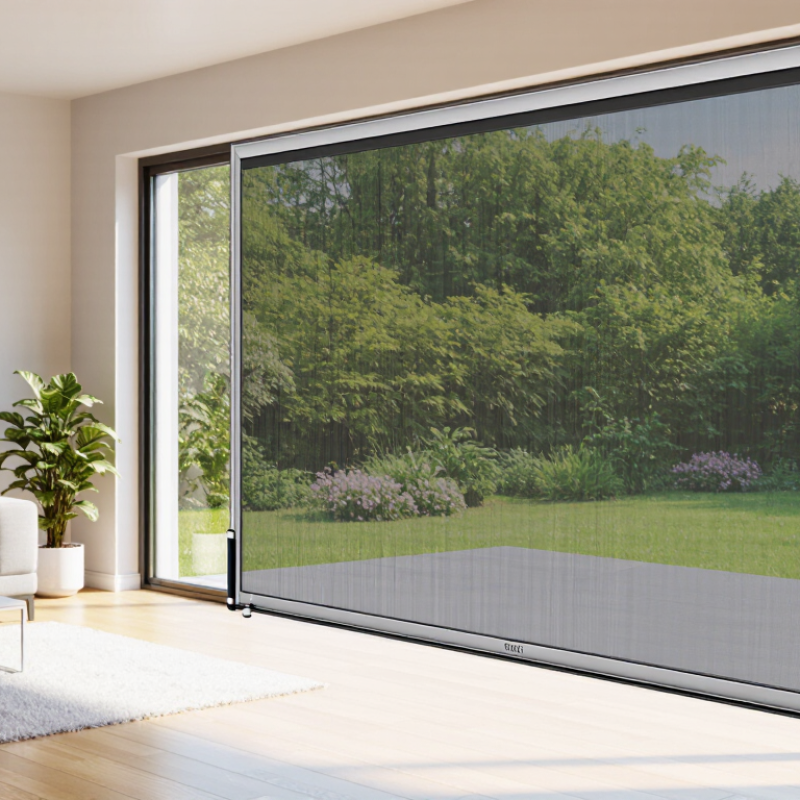
A sliding fly screen door is a framed mesh panel that travels along a track beside a glass patio door. It lets air and daylight pass while helping keep flies, mosquitoes, and leaves outside. The panel usually has a lightweight frame, mesh, rollers, and a handle; some designs also include brush seals around the edges. Smooth travel matters. A screen that sticks or leaves gaps may be inconvenient and less effective as a physical barrier.
Unlike a hinged screen, a sliding model does not swing into a room or across a narrow deck. That makes it useful where space is tight. Mesh may be made from fiberglass, polyester, or metal, with different trade-offs in visibility, durability, and airflow. No screen is a perfect seal. The WHO’s World Malaria Report 2023 estimated 249 million malaria cases worldwide in 2022, a reminder that insect exposure can have serious consequences. A screen door is only one protective measure, not a substitute for other appropriate precautions.
Tips: Measure the track opening in several places before choosing a replacement. Check that rollers move freely and the latch closes without forcing it. Clean mesh gently; harsh scrubbing can stretch or damage it. If the fit seems imperfect, inspect the frame and seals rather than blaming the mesh alone.
Why Choose a Sliding Fly Screen Door?
A sliding fly screen door lets you screen a wide patio opening while continuing to use the existing sliding-door track.
What the chart shows: Example screened opening areas are calculated from an 80-inch opening height and widths of 60, 72, and 96 inches. A wider opening provides more potential area for airflow; actual airflow depends on wind, mesh, and installation. Measure your doorway before choosing a screen.
How Does a Sliding Fly Screen Door Work?
Why Choose a Sliding Fly Screen Door?
How Does a Sliding Fly Screen Door Work?
A sliding fly screen door moves sideways on rollers fitted into a track, usually along the top and bottom of its frame. The mesh panel travels beside a glass door, letting you open the doorway for a breeze while forming a barrier against many flying insects. Airflow depends on wind and indoor-outdoor temperature differences; the mesh itself does not create ventilation. A common mesh specification is 18 × 16, meaning 18 strands per inch in one direction and 16 in the other. The finer the mesh, the more it may restrict airflow.
The ASHRAE Standard 62.2-2022 ventilation-rate formula uses floor area and bedroom count: 0.03 cfm per square foot, plus 7.5 cfm for each bedroom and one additional bedroom unit. This highlights an important limit: a screen door is not a substitute for designed home ventilation. It also cannot seal every tiny gap. A slightly worn roller or bent track can leave a corner open.
Tips: Keep the track free of grit, and check the side seals when the panel closes. If it catches, inspect the rollers before forcing it; that can worsen alignment. U.S. Department of Energy Energy Saver guidance also recommends natural ventilation only when outdoor conditions are suitable.
Why Choose a Sliding Fly Screen Door? — How Does a Sliding Fly Screen Door Work?
| Feature or dimension |
How it works |
Why it can be useful |
Practical consideration |
| Sliding operation |
The screen panel moves sideways along a track, usually guided by rollers at the top or bottom. |
It opens without swinging into the room or onto a patio, which can help save clearance space. |
The track must be clear of dirt and debris so the panel can move smoothly. |
| Insect barrier |
Mesh stretched across the frame forms a physical barrier while the screen is closed. |
It can help keep many flying insects out when a nearby glass or solid door is open. |
Small gaps around the frame, damaged mesh, or an open screen can let insects through. |
| Airflow |
Air passes through the mesh when there is a pressure difference, such as a breeze or open windows on opposite sides of a home. |
It allows ventilation without leaving the doorway completely unobstructed. |
Airflow depends on the mesh, wind conditions, and the size of the open area; mesh does not create ventilation by itself. |
| Daylight and visibility |
Open areas in the mesh let daylight and some outward visibility pass through. |
The doorway can feel more open than it would with a solid panel in place. |
Mesh color, weave, lighting, and viewing angle can affect how clearly people see through it. |
| Space and access |
The panel travels parallel to the doorway rather than rotating on hinges. |
This can suit patios, balconies, and walkways where swing space is limited. |
Sliding systems need a suitable track and enough adjacent space for the screen panel to move. |
| Frame and fit |
The frame holds the mesh and is sized to work with the opening and its track arrangement. |
A correctly fitted frame helps the panel run steadily and reduces unwanted gaps. |
Measure the opening and check track compatibility before selecting or installing a replacement screen. |
| Cleaning and upkeep |
Mesh can collect dust and debris; the rollers and tracks can also need periodic cleaning. |
Routine care can help maintain visibility and smooth operation. |
Use cleaning methods suitable for the screen material and avoid forcing a jammed panel. |
| What it does not provide |
A fly screen is a mesh barrier, not a sealed door, weatherproof barrier, or security door. |
Understanding its purpose helps set realistic expectations. |
Use a separate suitable door or security system when weather sealing, privacy, or security is required. |
What Benefits Does It Offer?
A sliding fly screen door lets fresh air move through a room while helping keep flies and other insects outside. Its panel moves along a track, so it does not swing into a walkway or knock against nearby furniture. That can be useful beside a kitchen island, a narrow balcony, or a busy patio entrance. The mesh also softens direct sunlight slightly, though it is not a substitute for a shade screen.
Ventilation matters indoors. The U.S. Environmental Protection Agency reports that people spend about 90% of their time indoors, and concentrations of some pollutants can be two to five times higher indoors than outdoors. Opening a screened doorway can support natural airflow when outdoor conditions are suitable. A fly screen does not filter every pollutant, however. It is a simple barrier, not an air-cleaning system.
There is a trade-off. Fine mesh can reduce airflow, and dust or pet hair may collect along the lower track. WHO reports that vector-borne diseases account for more than 17% of infectious diseases worldwide and cause over 700,000 deaths each year; a door screen cannot prevent these diseases, but keeping insects out of living spaces is a practical precaution. Check that the panel closes flush. A small gap matters. Cleaning the track regularly also helps the door slide smoothly and keeps the mesh clear.
Which Materials and Designs Are Available?
Sliding fly screens come in several mesh and frame materials, each suited to different conditions.
Fiberglass mesh is common because it resists rust and keeps its shape during everyday use. It offers a clear view, though very fine mesh can slightly reduce airflow. Polyester mesh is flexible and may suit homes where pets or frequent handling put extra strain on the screen. It is not a substitute for a protective barrier. Aluminum mesh feels firmer, but it can crease if pushed hard.
Small details matter.
Frames are often made from aluminum or vinyl. Aluminum is lightweight and generally holds up well, while vinyl can be practical in sheltered areas. For sliding doors, check that the frame fits the existing track and that the rollers move smoothly. A poorly matched frame may drag or leave gaps, even when the mesh is durable. Single-panel designs work for many doorways; wider openings may need multiple sliding panels. Look for replaceable rollers and brush seals along the edges. They help reduce gaps, but they do not make a screen airtight. Dark mesh can be less noticeable against an outdoor view, while lighter mesh may suit a shaded room. The best option depends on the doorway, exposure, and how often the screen is used.
Measuring carefully is unglamorous, but worth it.
How Should You Choose and Maintain One?
A sliding fly screen door works well only when it fits the opening and glides smoothly. Measure the width and height at several points; older frames are rarely perfectly square. Check the track for dents, dirt, and worn rollers before choosing a replacement. Select mesh for the insects in your area, while considering airflow and visibility. Finer mesh can reduce airflow. That trade-off matters on a still summer evening. Test a sample against daylight if possible, and confirm the frame overlaps the opening without leaving gaps.
For maintenance, vacuum the track and brush away grit before it jams the rollers. Wipe the mesh gently with mild soapy water; avoid harsh scrubbing that can loosen it. Check corners, seals, and mesh tension each season, and replace damaged parts early. I’d remeasure before ordering, even after checking the old door; it’s an easy detail to overlook.
The World Health Organization’s World Malaria Report 2023 estimated 249 million malaria cases worldwide in 2022. A well-fitted screen can help keep insects out, but it is not a substitute for appropriate public-health prevention measures.