
Locally made
Fiberglass Front Doors have become a familiar choice for homeowners who want a welcoming entrance without the upkeep often associated with wood. Their molded surfaces can resemble painted wood or show a convincing grain pattern, while insulated cores may help limit heat transfer. On a cold morning, that can mean a door that feels less chilly to the touch and a hallway that stays more comfortable. Performance still depends on the model, installation, and weather sealing.
Practicality is a major part of their appeal. Many fiberglass doors resist routine moisture and do not need frequent repainting or staining, though their finish still deserves care. Scratches, impact damage, and poor installation can affect appearance and performance. Details matter. A well-fitted frame, quality hinges, and sound weatherstripping are as important as the door material itself. Buyers should also compare glass options, warranties, and the manufacturer’s care instructions rather than relying on broad claims about energy savings or durability.
Style gives these doors another advantage. Homeowners can choose from clean modern panels, decorative glass, or designs that echo traditional wood entryways. Still, fiberglass is not automatically the best choice for every home; upfront prices vary, and repairs may be less straightforward than touching up painted wood. The popularity makes sense when appearance, maintenance, and insulation are weighed together. But the right door is the one suited to the home, climate, budget, and installation—not simply the one with the strongest sales pitch.
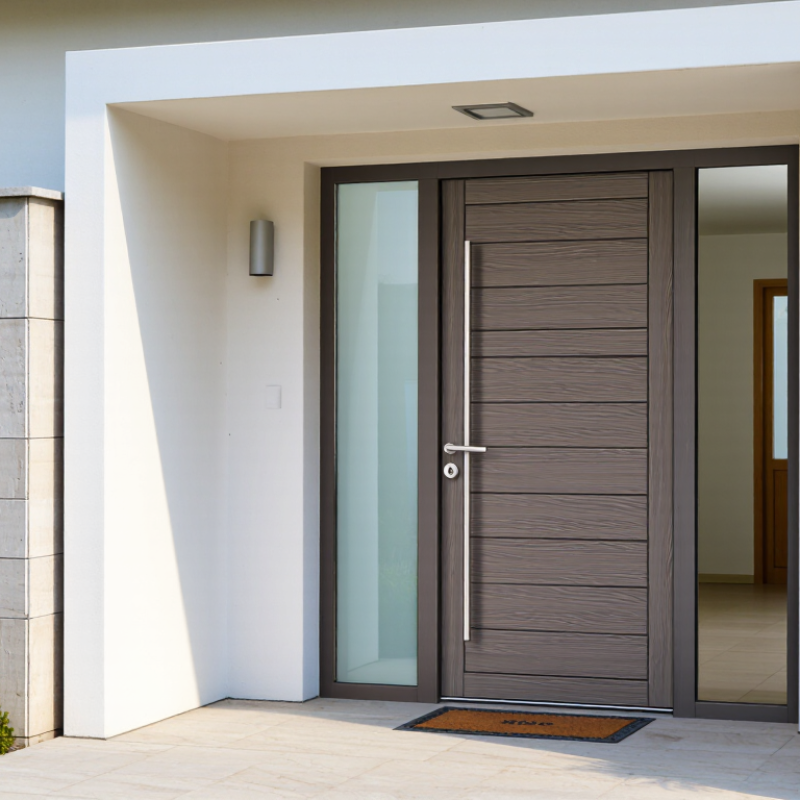
Fiberglass front doors owe much of their appeal to their layered construction. Molded composite skins form the visible faces and can carry a wood-grain texture without using solid timber. The skins do not provide all the insulation. The core matters. U.S. Department of Energy Energy Saver guidance gives typical insulated doors R-values of R-5 to R-6, compared with R-2 to R-3 for solid wood doors. These are general figures, not guarantees for every door. Glass panels, frame design, and installation can change whole-door performance.
Inside the skins, a foam core slows heat transfer; around the edge, weatherstripping compresses against the frame to limit drafts. A sweep and threshold help close the gap at the floor, where cold air can sneak in. NFRC ratings let buyers compare whole-product U-factor, which measures heat flow; lower values mean less heat passes through. Look beyond the center panel. A well-insulated core cannot make up for a warped frame or tired seals. Details matter. Even quality seals wear, and replacing them is easy to overlook.
| Door component | What it is | How it contributes to performance | Practical considerations |
|---|---|---|---|
| Fiberglass composite skins | Molded outer layers made from glass fibers embedded in a resin-based composite. They can be formed with smooth or wood-grain-like surfaces. | Provide the door’s exterior and interior faces, resist routine moisture exposure, and can be finished with paint or stain when the product allows. | Finish requirements vary by model and exposure. Follow the manufacturer’s instructions for compatible coatings, cleaning, and refinishing. |
| Insulating core | Many fiberglass entry doors use a rigid foam core, commonly polyurethane or polystyrene, between the skins. | Slows heat transfer through the door panel compared with a hollow construction. The whole door’s energy performance also depends on its frame, glazing, and seals. | Ask for the tested whole-door U-factor rather than relying on the core material alone. Lower U-factors indicate less heat transfer. |
| Stiles and rails | Reinforcing members along the door’s sides and across its top and bottom. Depending on the design, they may be wood, composite, or another structural material. | Help support the panel and provide areas for hardware attachment. Their design affects rigidity and the door’s ability to accommodate locks and hinges. | Construction varies. Confirm hardware preparation and reinforcement details when choosing a door for heavy locks or specialized hardware. |
| Weatherstripping | Flexible seals fitted around the door perimeter, often made from materials such as rubber, EPDM, silicone, or foam. | Compress against the closed door to limit drafts and reduce the passage of air, dust, and water around the edges. | Seals need to contact the door evenly. Inspect them periodically for gaps, compression loss, cracking, or damage. |
| Threshold and bottom seal | The sill at the base of the doorway, paired with a sweep, gasket, or adjustable sealing system on the door bottom. | Helps close the gap beneath the door and manages water at the entry. A well-fitted threshold supports the door’s overall air and weather control. | Correct installation and adjustment are important. The threshold must suit the floor height, drainage conditions, and accessibility needs. |
| Glazing and decorative inserts | Optional glass panels, sidelights, or decorative inserts incorporated into or beside the door. | Bring daylight into the entry and offer design flexibility. Their thermal and solar performance depends on the glazing construction and configuration. | Glass changes the performance of the complete door assembly. Compare whole-unit ratings and consider privacy, orientation, and climate. |
| Complete installed assembly | The door slab, frame, hardware, glazing, threshold, seals, and the materials used to connect the frame to the wall opening. | Determines real-world operation, weather resistance, and energy performance. A well-insulated slab cannot compensate for major installation gaps. | Correct fitting, flashing, air sealing, and adjustment matter. Ratings and features differ among products, so compare tested specifications for the complete unit. |
Note: Fiberglass door construction and performance vary by design. Check the product’s tested ratings, care instructions, and installation requirements before making a comparison.