Get a Quote

Why Choose Resin Insects for Wholesale Buyers?

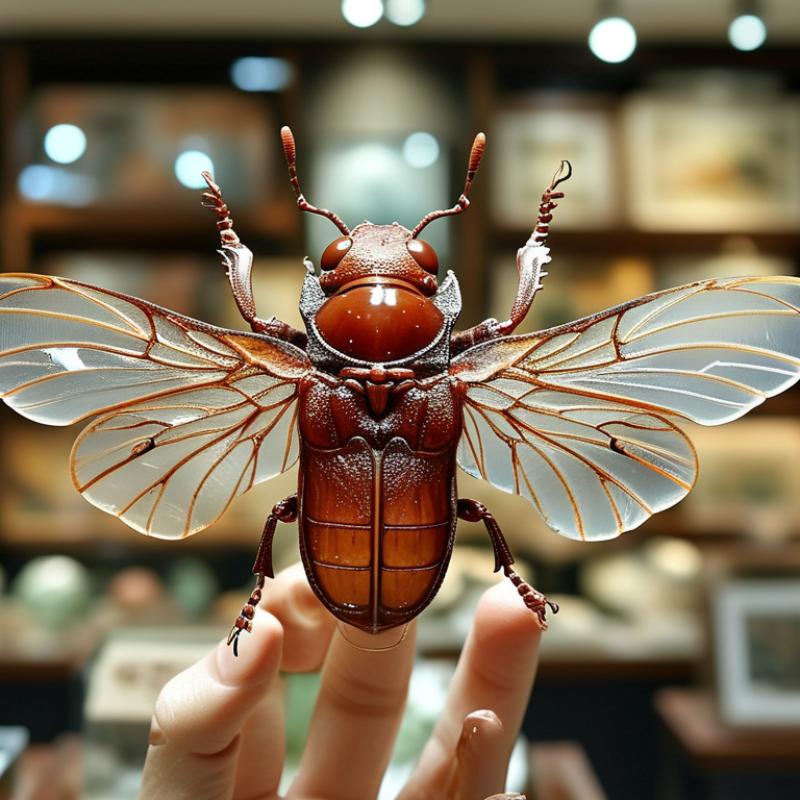
Wholesale buyers often seek products that look distinctive, remain consistent, and ship with manageable risks. Resin Insects can meet these needs when manufacturers control molding, coloring, curing, and packaging carefully. Unlike fragile natural specimens, well-made resin pieces offer stable shapes and repeatable designs. They can suit museum gift shops, educational retailers, craft stores, seasonal displays, and themed home décor collections. The visual appeal is immediate. A translucent wing, detailed antenna, or metallic beetle shell can attract attention under warm shop lighting.

Quality still depends on the supplier. Buyers should request samples before placing large orders. Examine surface clarity, embedded details, edges, color accuracy, and possible bubbles. Check whether the pieces have a strong odor or sticky finish. These small observations reveal production discipline. Packaging matters too. Individual sleeves, molded trays, and clear labeling can reduce scratches during transport. Reliable suppliers should provide product dimensions, material information, lead times, carton details, and realistic photographs. They should also explain customization limits instead of promising everything.

Pricing deserves a broader view. The cheapest option may create higher costs through defects, returns, or slow replenishment. A practical supplier balances unit price with durability, consistency, communication, and after-sales support. Buyers should also confirm that designs, labels, and materials meet the rules of their target markets. Not every attractive sample performs well at scale. That is worth remembering. By comparing samples, production records, and customer feedback, wholesale buyers can judge whether Resin Insects offer dependable value rather than temporary visual appeal.
Why Choose Resin Insects for Wholesale Buyers?

What Are Resin Insects and How Are They Made?

Why Choose Resin Insects for Wholesale Buyers?

Resin insects are decorative specimens made from clear casting resin, pigments, molds, and insect forms. Some use responsibly sourced specimens, while others recreate beetles, butterflies, or cicadas by hand. Makers usually prepare the form, mix resin with a measured hardener, and pour thin layers into a mold. Vacuum degassing removes trapped bubbles. Each layer must cure before the next one is added.

The process needs patience. A warm, dust-controlled workspace improves clarity, but small flaws still happen. Tiny bubbles. Uneven wings. Slight color shifts. These details should not be hidden from wholesale buyers. They affect display quality and return rates. Finished pieces are often sanded, polished, and checked for sharp edges before packing. UV-resistant coatings can help reduce yellowing, although no coating stops aging forever.

Industry data supports resin’s wider manufacturing role. Grand View Research reported that the global epoxy resin market was valued at approximately 8.5 billion US dollars in 2023. This scale reflects established supply chains and repeatable curing technology, not a specific insect-product market. Buyers should still request curing records, material specifications, sample approvals, and packaging tests. The global decorative coatings market also depends heavily on consistent color and surface performance, according to recent reports from MarketsandMarkets. That lesson applies here. A beautiful sample is not enough. Batch consistency matters more.


Why Choose Resin Insects for Wholesale Buyers?

Resin insects are decorative replicas or preserved specimens embedded in clear synthetic resin. The usual process includes preparing the insect or mold, mixing resin with its hardener, casting, curing, demolding, and polishing. Curing time depends on the resin type and environmental conditions.

Typical curing times: UV resin generally cures within minutes under a suitable UV lamp, polyester resin commonly cures within several hours, and two-part epoxy resin often requires one to three days for full curing. Actual times vary by product formulation, layer thickness, temperature, and humidity.

Why Do Resin Insects Appeal to Wholesale Buyers?

Resin insects appeal to wholesale buyers because they combine visual novelty with predictable production. A beetle, moth, or dragonfly can become a desk ornament, educational aid, gift item, or display accent. Their small size also reduces storage pressure and makes mixed cartons practical. That flexibility matters when retailers test new categories.

Industry data supports this interest. Grand View Research estimates that the global handicrafts market could reach about USD 1.3 trillion by 2030, with personalization and decorative products supporting demand. Allied Market Research also projects steady growth in the global handicrafts sector through 2032. These reports do not measure resin insects specifically, but they show a wider appetite for distinctive, handmade-looking merchandise. Wholesale buyers can use insect designs to create themed collections without developing complex product structures.

The buying decision still needs discipline.

Resin clarity, painted details, mold accuracy, and packaging strength should be checked through physical samples. Small wings can break during transit. Some pigments may fade under strong shop lighting. This category is not risk-free.

Buyers should request material specifications, carton dimensions, defect tolerances, and batch photos before confirming volume. It is also wise to compare three designs in one sample order, because a beautiful single piece may not produce a balanced retail assortment.

In practice, insects with clear silhouettes and stable bases often display better than highly delicate forms. That assumption deserves testing.

Which Resin Insect Products Fit Different Retail Markets?

Wholesale buyers should match resin insect products with the shopper’s reason for buying. Educational stores suit clear specimens, labeled wings, and small magnifier sets. These products support classroom displays and curious children. Grand View Research reported that the global educational toys market reached about USD 62.8 billion in 2023. Its projected growth suggests steady interest in learning-led merchandise, though resin insects need accurate species information and safe packaging.

Gift shops usually perform better with framed beetles, butterflies, or colorful desk ornaments. Customers want an immediate visual effect, not a long lesson. Small items under ten dollars can support impulse purchases near checkout. Museum shops may prefer detailed replicas, habitat cards, and display boxes with neutral design. Retail staff should explain whether each insect is a replica, rather than implying it is a real specimen.

Different markets need different pack sizes. A garden center could test pollinator-themed sets with short planting notes. A stationery shop might choose insect bookmarks, pins, or compact paperweights. The U.S. toy market declined 7% in 2023, according to Circana’s industry review, so buyers should avoid ordering too many similar designs. Start with a narrow assortment. Measure sell-through. One assumption needs testing: bright colors may attract children, but adults often prefer realistic details and muted packaging. Retailers should also verify material safety, age guidance, labeling, and import requirements before placing wholesale orders.

How Can Buyers Evaluate Quality, Safety, and Durability?

Wholesale buyers should inspect resin insects as functional products, not merely attractive decorations. Request a physical sample from the exact production batch. Check the body under strong light for bubbles, cracks, cloudy areas, or uneven coloring. A sharp leg or loose wing can create handling risks and quality complaints.

Ask suppliers for clear material information, pigment details, and safety documents. The resin should have a controlled odor, smooth edges, and a stable surface after curing. If products may reach children, pets, or classrooms, buyers need stricter safety evidence and age guidance. Do not accept vague claims such as “non-toxic” without supporting test records. A label can sound convincing.

Durability needs practical testing. Drop samples from table height, rub painted areas with a dry cloth, and examine them after mild heat and humidity exposure. Watch for sticky surfaces, fading, brittle antennae, and detached parts. Store several samples for a few weeks. Time reveals problems. Packaging also matters, because fragile details may break during transport even when the resin itself is strong.

A glossy finish can mislead. I have seen attractive samples hide thin legs and weak joints. That mistake is easy to repeat when buyers judge only photographs. Keep inspection photos, batch numbers, test results, and accepted tolerances in writing. Reliable wholesale decisions come from repeatable checks, honest communication, and evidence that survives closer handling.

What Should Wholesale Buyers Consider Before Placing an Order?

Wholesale buyers should inspect resin insect samples before discussing price. Check antennae, legs, wing edges, color consistency, and surface bubbles under bright light. A small defect can become expensive when multiplied across 500 pieces. Ask for the resin type, curing method, pigment stability, and documented safety information. Suppliers should provide measurable dimensions and weight, not only attractive photos.

Packaging deserves equal attention. OECD’s Global Plastics Outlook reports that global plastic waste reached 353 million tonnes in 2019, nearly double the 2000 level. Buyers should request recycled or reduced packaging where practical, while protecting fragile details. Drop-test samples and inspect inner padding. Standards such as ASTM D4169 can help structure distribution testing, although they do not replace real shipping trials. That part is often overlooked.

Order terms need careful calculation. Confirm minimum order quantity, production lead time, spare-unit policy, carton dimensions, and defect thresholds before paying a deposit. ISO 2859-1 offers a recognized approach for acceptance sampling, but buyers should agree on inspection levels in writing. Ask whether colors may vary between batches. They probably will. A pre-production sample is useful, yet it cannot reveal every factory inconsistency. Budget for customs, storage, and slow-moving designs. Decorative trends change faster than many purchasing plans.

Why Choose Resin Insects for Wholesale Buyers? - What Should Wholesale Buyers Consider Before Placing an Order?

Wholesale Consideration Why Resin Insects Are Suitable Practical Data or Benchmark What Buyers Should Verify
Product durability Cured resin creates a rigid form that can preserve detailed insect shapes for decorative, educational, and gift applications. The finished item should be fully cured, free from tackiness, and resistant to ordinary handling during packing and display. Request a cured sample and inspect thin legs, antennae, wings, edges, and painted surfaces for cracks, flexibility, or uncured areas.
Detail reproduction Liquid resin can fill small mold features, allowing visible textures such as wing patterns, segmented bodies, and leg structures. Compare the approved sample with production pieces under normal retail lighting; small details should remain clear without excessive flash or molding seams. Define acceptable limits for bubbles, surface pits, seam lines, missing details, and paint misalignment before placing the order.
Design variety Resin can be cast in multiple shapes, colors, finishes, and sizes, supporting collections rather than a single standardized item. A product range may be organized by insect type, pose, colorway, finish, size, or intended use, such as display, education, or décor. Confirm the exact assortment ratio, color references, dimensions, finish, and whether mixed designs count toward the minimum order quantity.
Dimensional consistency Reusable molds can help produce repeated shapes with consistent dimensions across a wholesale batch. Specify length, width, height, and any mounting or display dimensions using the same measurement method for every item. Ask for a dimensional tolerance, packaging dimensions, product weight, and a sample carton measurement for freight planning.
Packaging protection Although cured resin is rigid, protruding parts can still be damaged by impact, compression, or movement during transport. Packaging should prevent item-to-item contact and immobilize delicate parts such as legs, antennae, tails, and wings. Perform a packed-sample drop and vibration assessment appropriate to the planned shipping method, then record the approved packaging specification.
Surface finish and color Resin surfaces can be polished, painted, coated, or finished with transparent effects to match different retail concepts. The approved finish should be judged for gloss or matte level, color uniformity, adhesion, visible brush marks, and dust contamination. Approve a physical color standard or reference sample and define acceptable variation for each color and surface finish.
Material and safety documentation Resin products differ by formulation, coating, pigment, and intended use, so documentation is important for responsible purchasing. Documentation should identify the material or coating used, curing status, care instructions, and any applicable testing or compliance information. Request the relevant safety data, test reports, declarations, labeling details, and age or use restrictions required by the destination market.
Minimum order quantity Casting and finishing workflows can support repeated production, but molds, colors, and packaging may create separate order requirements. Evaluate the minimum quantity by design, color, size, packaging format, and total order rather than using only one overall quantity. Obtain written confirmation of minimum quantities, setup charges, mixed-item rules, reorder quantities, and sample fees.
Cost structure The final wholesale cost depends on resin usage, mold complexity, manual finishing, packaging, quantity, and shipping. Compare total landed cost rather than unit price alone, including sampling, tooling, packaging, freight, duties, inspection, and expected defect allowance. Request a line-item quotation with currency, trade terms, payment schedule, validity period, and all one-time charges clearly separated.
Quality control A defined inspection process helps control common issues such as bubbles, incomplete casting, uneven coating, breakage, and color variation. Use a written checklist covering appearance, dimensions, weight, function, packaging, quantity, and labeling. Agree on inspection timing, sampling method, defect classification, photo evidence, replacement policy, and responsibility for rework or shortages.
Storage and retail handling Proper storage helps preserve the appearance of painted or coated resin products before sale. Follow the supplier’s care instructions and avoid prolonged exposure to excessive heat, direct sunlight, moisture, or abrasive contact unless the product is specifically designed for those conditions. Confirm storage limits, cleaning method, display restrictions, recommended handling, and whether the product is intended for indoor or outdoor use.
Order readiness A clear approval process reduces misunderstandings between the sample, production batch, and final retail delivery. The purchase file should include approved samples, specifications, artwork or color references, packaging details, quantities, delivery terms, and inspection criteria. Place the order only after the specification sheet, commercial quotation, sample approval, production schedule, and corrective-action terms are confirmed in writing.

Article Source:

Back to top