Locally made
Choosing where to find the best glass folding doors in China begins with more than comparing catalogue prices. The 2023 Global Status Report for Buildings and Construction, published by UNEP and the Global Alliance for Buildings and Construction, says buildings and construction used 34% of global energy demand in 2022. The sector also produced 37% of energy- and process-related carbon emissions. These figures make insulation, airtightness, and durable seals practical buying questions—not decorative extras.
China offers many places to start: established manufacturers, specialist showrooms, and verified B2B sourcing platforms. Yet a polished website proves little. Details matter. Ask for current product specifications, frame and glass options, hardware brands, and evidence of relevant quality testing. Request a physical sample where possible. A corner joint, locking handle, and bottom track can reveal more than a staged room photograph. Check how panels stack, how the threshold drains, and whether replacement rollers are available.
A careful comparison should also cover factory experience, project references, lead times, packaging, and after-sales support. Confirm that quoted performance values apply to the exact door configuration, rather than a different model. Independent inspection can help when production is remote. It adds cost, and it cannot prevent every problem. That limitation is worth admitting. The “best” supplier depends on climate, opening size, installation skill, and budget. This guide will help buyers assess Chinese sources with evidence, not just attractive promises.
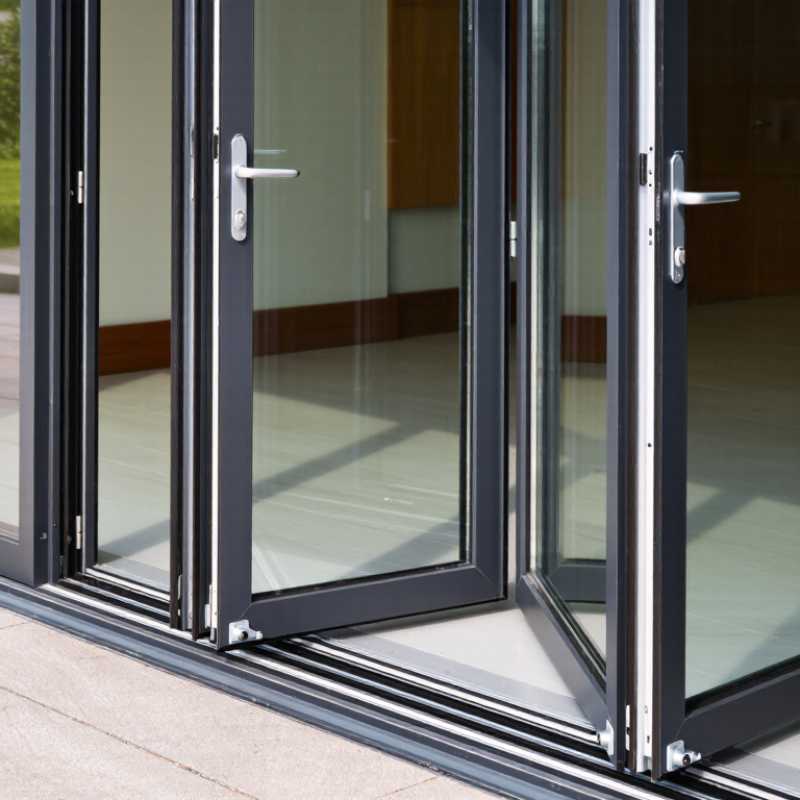
A glass folding door is a set of hinged panels that slide along a track and stack to one side. Quality depends on more than clear glass. Check the frame’s finish, hinge strength, roller movement, seals, and drainage details. Panels should travel smoothly without scraping or jolting. The track should feel firm underfoot, not flimsy.
Before ordering, measure the opening at several points; walls and floors are rarely perfectly straight. Ask how the supplier tests repeated opening cycles, water resistance, and air leakage, and request documented results. Inspect corner joints and seals closely. A tiny gap can admit wind-driven rain. I have seen attractive samples feel quite different once installed, so clarify who handles installation guidance and replacement parts. Some details are easy to overlook. Check them early.
China’s Main Manufacturing Regions for Glass Folding Doors
Guangdong, especially Foshan and nearby cities, is a major hub for architectural doors and windows. Buyers can find suppliers offering aluminum frames, insulated glass, and custom panel sizes. The region’s dense supplier network can make component sourcing convenient, but product quality still varies. Ask how profiles, rollers, seals, and glass are specified.
Zhejiang and Jiangsu also have established building-material manufacturing clusters. Some factories focus on made-to-order systems, while others produce standard configurations for faster delivery. Visit a showroom or request a sample corner to inspect frame finish and folding action. A smooth demonstration matters. Still, one sample cannot prove long-term durability; ask for documented specifications and check how the supplier handles installation guidance.
Tips: Share your opening width, height, and site photos before requesting a quote. Confirm packing details, lead time, hardware options, and replacement-part availability in writing. Regional labels are only a starting point. I have seen attractive quotations omit practical details, so compare the complete specification, not just the price.
| Manufacturing region | Key locations | Relevant industry strengths | What buyers can source | Checks before ordering |
|---|---|---|---|---|
| Pearl River Delta, Guangdong | Foshan, Guangzhou, and surrounding cities | Foshan is a major base for aluminum profiles and building-material manufacturing. The wider Pearl River Delta also has established construction-product supply chains and access to export logistics. | Aluminum-framed folding door systems, custom configurations, profiles, fittings, and related architectural products. | Confirm whether the supplier fabricates complete door sets or only supplies profiles or components. Verify glass specification, hardware, finish, packing, and installation details. |
| Shandong aluminum industry cluster | Linqu County and nearby areas in Weifang | Linqu has a substantial aluminum-processing industry, including production connected with architectural profiles and building products. | Aluminum profiles and window-and-door products; some manufacturers offer folding systems or can coordinate associated components. | Ask for drawings and performance data for the specific folding system. Check panel dimensions, track design, drainage, sealing, and compatibility of glass and hardware. |
| Zhejiang metal-products region | Yongkang and other manufacturing centers in Zhejiang | Zhejiang has a broad manufacturing base for metal products and hardware. Yongkang is particularly associated with metal-product manufacturing. | Door-related metal components and hardware, with selected manufacturers also producing complete door systems. | Distinguish hardware specialists from complete-system manufacturers. Confirm that the supplier can provide engineering drawings, tested components, and project-specific glass specifications. |
Regional guidance: These are manufacturing clusters, not guarantees of product quality. Capabilities vary by factory, so assess the actual production scope, technical documentation, samples, and compliance requirements for the destination market.
Finding a dependable glass folding door manufacturer takes more than comparing prices. Look for factories that explain their production process, hardware options, glass specifications, and quality checks clearly. Ask for technical drawings and confirm that the proposed panels suit your opening size, wind exposure, and daily use. Details matter.
Request samples or arrange a live video walk-through of the workshop. Check how the manufacturer handles frame joints, drainage paths, seals, and roller movement. A smooth sample is useful, but it does not prove every order will match. Ask how they inspect finished doors, protect glass during packing, and manage replacement parts. Clear written answers are a good sign. Vague promises are not.
Tips: Ask for recent project photos, preferably with installation details. Compare warranty terms and lead times in writing. Have an independent inspector check a larger order before shipment. If something feels unclear, pause and ask again; I have learned that a rushed decision can cost more than a careful delay.
When comparing Chinese suppliers, look beyond showroom photos. Ask for profile alloy details, glass build-up, hardware load ratings, and documented cycle-test results. A smooth sample does not prove long-term performance. Check whether the supplier can provide drawings, production tolerances, and inspection records for your exact configuration. Customization matters: opening width, panel count, threshold height, finish, and insect-screen options should be confirmed before production.
Certifications help make comparisons more objective, but verify their scope and issuing body. Request applicable product test reports, safety-glass documentation, and quality-management certificates, then confirm they cover the factory and product being quoted. For energy performance, compare whole-door U-factor and solar heat-gain data where available. The U.S. Department of Energy’s Energy Saver guidance estimates that windows account for 25–30% of home heating and cooling energy use; this is not a folding-door figure, but it shows why glazing and air sealing deserve attention. Ask for test conditions, not just a headline rating.
Small details matter. I would also request a sample corner and operating hardware before approval. It takes time, and I have sometimes wanted to skip it. That is usually a mistake.
Where to Find the Best Glass Folding Doors in China?
Ways to Verify Suppliers and Source Doors in China
Finding a suitable supplier takes more than comparing online prices. Ask for the company’s registered details, production address, and recent project references. Then arrange a video call or independent factory visit. Look for actual production equipment, glass storage areas, and finished doors—not only polished showroom displays. Ask who makes the frames and hardware, since some suppliers rely on outside workshops. That is not automatically a problem, but it should be clear.
Share a written specification before requesting a quotation. Include opening dimensions, panel count, frame finish, glass type and thickness, hardware, and installation conditions. Request samples of frame color and hardware, and inspect how smoothly a test panel folds. Check that stated safety and performance test reports match the proposed glass and door configuration. Small differences matter. A report for another product may not tell you much.
Before placing a large order, confirm packing details, production lead time, replacement-part terms, and who handles damage claims. Use a third-party inspection to check dimensions, finish, operation, and packaging before shipment. Keep drawings, approved samples, and order changes in writing. I would not rely on a single inspection photo; details can be missed. Freight costs and installation requirements also deserve early review, because an inexpensive door can become costly after delivery.
A practical framework for verifying suppliers and sourcing doors in China
Suggested evaluation weights for comparing potential suppliers—not measured market statistics. Check business credentials, request project references and product test reports, review hardware and glass specifications, and confirm quality-control procedures before ordering. Verify certificates and claims with the issuing bodies, and approve a pre-production sample where possible.