Get a Quote

China Best Internal Bifold Doors With Glass Manufacturers?

Choosing China’s best internal bifold doors with glass manufacturers requires more than comparing online prices. It demands careful attention to engineering, materials, factory experience, and service reliability. These doors can transform a dark hallway into a brighter, more connected living space. Yet attractive photographs do not always reveal construction quality.

Experienced buyers usually examine the complete door system. This includes aluminum or timber frame strength, hinge performance, glass specification, seals, track design, and panel alignment. For homes, laminated or tempered safety glass may offer practical protection, depending on local requirements. A reliable manufacturer should provide clear technical drawings, finish samples, test information, and consistent production records. Factory audits, sample orders, and video inspections can also reduce avoidable risks.

Details matter. A smooth folding panel should move quietly, without scraping the floor or forcing the handle. The gap between panels should remain even after repeated operation. Powder coating should look uniform under natural light, not only beneath a showroom lamp. Small issues become expensive later.

No manufacturer is perfect. A well-known supplier may still have weak packaging or slow communication. A lower-cost factory may produce excellent doors but lack export experience. This is where practical judgment matters. Compare several factories, request a real project reference, and confirm installation support before signing an order. The best choice is not simply the cheapest source. It is a dependable partner that understands your opening sizes, climate, design expectations, and long-term maintenance needs. That balanced approach makes sourcing internal bifold doors with glass more transparent, measurable, and suitable for demanding residential or commercial projects.
China Best Internal Bifold Doors With Glass Manufacturers?

What Are Internal Bifold Doors With Glass?

China Best Internal Bifold Doors With Glass Manufacturers?

What Are Internal Bifold Doors With Glass?

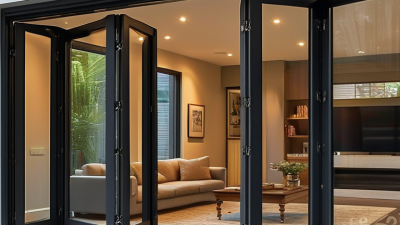
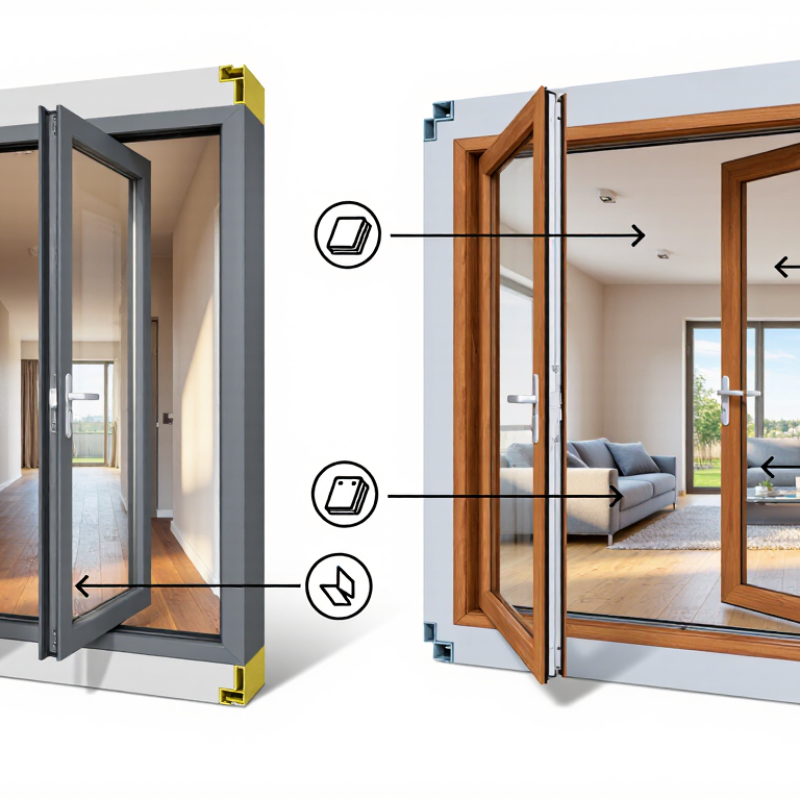
Internal bifold doors with glass are folding door panels connected by hinges. They slide along a track and stack neatly beside an opening. Unlike hinged doors, they need less swing space. This makes them useful between kitchens, dining rooms, studies, and living areas.

The glass keeps rooms visually connected while the folding leaves control sound, privacy, and airflow. Clear glass gives maximum visibility. Frosted, fluted, or laminated glass offers more privacy and safer impact performance. Slim aluminum or engineered timber frames can support different interior styles, but the frame still affects weight, alignment, and long-term movement.

Performance deserves careful checking. The U.S. Department of Energy reports that windows can account for 25–30% of residential heating and cooling energy use. Internal doors do not face outdoor weather directly, yet poor seals can still transfer noise and reduce comfort. The 2024 Global Status Report for Buildings and Construction states that buildings consume about 32% of global energy. Small design choices matter.

A reliable specification should include panel thickness, glass type, track load, hinge quality, and tested acoustic results. Measurements must be accurate. Even a few millimeters can create rubbing or uneven gaps. I have found that visual appeal is often easier to promise than smooth daily operation. That part needs more honest testing.

China Best Internal Bifold Doors With Glass Manufacturers? What Are Internal Bifold Doors With Glass?

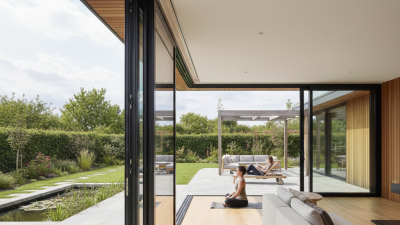
Internal bifold doors with glass are space-saving folding door systems designed to separate rooms while allowing daylight and visual connection to pass through. The chart compares typical center-of-glazing U-factors for common glass configurations used in glazed door systems. Lower values indicate better thermal insulation.

Typical reference values: actual performance varies with glass coating, gas fill, spacer, frame material, air leakage, and complete door design. Whole-door U-factor may be higher than center-of-glazing performance.

Key Materials, Glass Types, and Door Design Options

Choosing China’s best internal bifold doors with glass begins with material discipline. Aluminum frames offer low maintenance and slim sightlines, while engineered timber provides warmer touch and better interior character. For humid rooms, moisture-resistant coatings matter more than appearance alone. The U.S. Department of Energy reports that windows can account for roughly 25–30% of residential heating and cooling energy use. Glazed internal doors usually affect less energy, but poor seals can still create drafts and noise.

Glass selection should match the room. Tempered glass improves impact safety and breaks into smaller pieces. Laminated glass holds fragments together and can reduce sound transfer. Low-E double glazing is useful near exterior walls or conditioned spaces, though it may be excessive for a purely internal opening. The National Fenestration Rating Council emphasizes tested U-values and solar heat gain data, not visual claims. Clear glass maximizes light. Reeded or satin glass adds privacy. Acoustic laminated glass suits bedrooms, offices, and meeting rooms.

Design options include two, three, or four panels, center-opening layouts, and synchronized folding hardware. Slim frames create a cleaner opening, but larger panels demand stronger rollers and accurate installation. A dependable manufacturer should provide glass certificates, hardware load ratings, coating specifications, and dimensional tolerances. China’s GB 15763.2 and EN 12150 are useful safety references. Do not trust attractive renderings alone. The weak point is often the installation gap. Even excellent glass performs poorly when the floor is uneven or the hinges are misaligned. I would inspect a full-size sample before ordering. That extra step can expose an uncomfortable design mistake.

How to Evaluate Chinese Bifold Door Manufacturers

When evaluating Chinese bifold door manufacturers, look beyond polished websites and attractive showrooms. A factory should explain its aluminum grades, glass options, hinge design, and drainage details clearly. Ask for section drawings, hardware load ratings, and sample corners. A reliable supplier can identify tolerances, coating methods, and expected maintenance. Vague answers deserve caution.

Factory experience matters. Request a live video tour or an independent inspection before placing a large order. Check whether production follows written drawings, not only verbal promises. Review quality records for frame dimensions, glass thickness, handle operation, and folding alignment. Ask how damaged glass, missing hardware, and color variation are handled. Good after-sales procedures should include response times and replacement rules.

I once focused too heavily on price and overlooked packaging strength. The doors arrived safely, but several accessories were poorly labeled. That small failure slowed installation. Now I compare export packing, assembly guides, mock-up testing, and communication speed. I also verify performance reports for air, water, and wind resistance against project conditions. Not every factory needs the cheapest offer. The better choice documents limits honestly and corrects mistakes quickly.

China Best Internal Bifold Doors With Glass Manufacturers? - How to Evaluate Chinese Bifold Door Manufacturers

Evaluation Dimension What to Check Practical Benchmark or Technical Reference Required Evidence from the Manufacturer Weight Score
(1–5)
Glass Safety Glass type, thickness, edge treatment, and breakage behavior. For internal doors, 8–10 mm toughened safety glass is commonly specified. Request compliance with EN 12150-1 or an equivalent national safety-glass standard. Glass specification sheet, heat-soak information where applicable, independent test report, and sample inspection of polished edges. 15% —
Door Configuration Panel quantity, folding direction, opening arrangement, and inactive-leaf position. The quotation should clearly state configurations such as 2, 3, 4, or more panels, left/right opening, and whether the system is top-hung or floor-supported. Dimensioned shop drawing, hardware layout, opening diagram, and confirmation of the final stacking arrangement. 10% —
Size Capability Maximum panel width and height, total opening size, and allowable glass weight. Verify limits for the selected hardware rather than relying on a generic catalogue. A 10 mm glass panel weighs approximately 25 kg per square metre before frame and hardware are added. Load chart, engineering calculation, maximum tested panel dimensions, and project-specific confirmation of panel weight. 10% —
Frame Material Aluminium alloy, profile wall thickness, surface finish, and dimensional consistency. Ask for the aluminium alloy designation, profile drawings, wall-thickness range, and finish specification. Powder coating should identify the applicable coating class or test method. Profile cross-sections, material declaration, coating data sheet, and finish samples checked under consistent lighting. 10% —
Hardware and Load Rating Hinges, rollers, pivots, handles, locks, guides, and anti-jump components. The stated hardware load rating should exceed the calculated panel weight with a clear safety margin. Components should operate without binding throughout the full folding cycle. Hardware catalogue, load-rating documentation, installation details, and a physical sample or operation video showing the complete system. 15% —
Operation and Durability Opening force, alignment, roller smoothness, hinge movement, and cycle testing. Request a documented opening-cycle test using the same hardware and panel weight as the proposed design. Test conditions and acceptance criteria must be stated. Cycle-test report, inspection checklist, warranty terms, replacement-parts policy, and video of a representative assembly in operation. 15% —
Acoustic and Thermal Performance Air gaps, seals, glass configuration, and suitability for interior applications. Single-glazed internal bifold doors generally provide limited sound insulation compared with sealed double-glazed systems. Request tested acoustic data rather than an estimated decibel value. Laboratory acoustic report where required, seal profile, glass build-up, and written clarification of whether values apply to the complete door or glass only. 8% —
Manufacturing Quality Control Incoming-material inspection, dimensional checks, glass inspection, assembly control, and final inspection. A reliable supplier should have documented inspection points and traceability for profiles, glass, hardware, and finished door assemblies. Quality manual, inspection records, nonconformance procedure, calibration records, and a sample final-inspection report. 10% —
Certifications and Compliance Management-system certification and product standards relevant to the destination market. ISO 9001 demonstrates a certified quality-management system but does not by itself prove product performance. Verify the certificate scope, validity, and issuing body. Current certificate, certificate-scope page, test reports, declaration of conformity where applicable, and destination-market compliance documents. 7% —
Customization and Drawings Ability to adapt dimensions, glass options, colours, handles, thresholds, and opening details. The supplier should issue project-specific drawings showing finished opening dimensions, tolerances, panel clearances, hardware positions, and installation interfaces. Approved shop drawings, colour chart, glass-option list, hardware schedule, and a documented drawing-approval workflow. 5% —
Packaging and Shipping Protection Protection of glass, corners, frames, hardware, and finished surfaces during transport. Packaging should separate glass from metal, protect corners and edges, prevent panel movement, and identify each package against the installation drawings. Packaging photos, packing list, crate dimensions and weight, loading method, insurance terms, and damage-claim procedure. 3% —
Lead Time and Project Control Sample approval, production schedule, inspection date, and shipping readiness. The supplier should provide separate timelines for drawing approval, sample production, manufacturing, inspection, and dispatch instead of one undetailed lead-time figure. Milestone schedule, production-capacity statement, order-status process, and written terms for changes after drawing approval. 4% —
After-Sales Support Installation guidance, spare parts, adjustment instructions, warranty coverage, and response time. Warranty conditions should identify covered components, exclusions, claim documentation, and the period for supplying replacement hardware. Installation manual, adjustment guide, spare-parts list, warranty document, service contacts, and escalation procedure. 3% —
Scoring method: Assign each criterion a score from 1 to 5 after reviewing documents, samples, and factory evidence. Multiply the score by the stated weight to compare manufacturers objectively. Product dimensions, glass thickness, load limits, performance values, and lead times must be confirmed for the specific door configuration and project.

Manufacturing Standards, Customization, and Quality Control

China Best Internal Bifold Doors With Glass Manufacturers?

Reliable internal bifold doors begin with controlled manufacturing standards. ISO’s 2023 Survey recorded more than 1.2 million ISO 9001 certificates worldwide. Certification alone proves little, though. Buyers should request batch records, material certificates, and inspection results. For glass, manufacturers should follow relevant safety requirements, such as EN 12150 for toughened glass or ANSI Z97.1. Door panels need stable moisture control, accurate machining, and smooth hardware alignment. A 1-millimeter error can become visible when several panels fold together.

Customization should be practical, not merely attractive. Suppliers may offer clear, frosted, ribbed, or laminated glass, with aluminum, timber, or composite frames. Ask for tested samples. Check the real color under daylight. Confirm opening width, stacking direction, hinge position, handle height, and floor guide details before production. Industry research from Grand View Research reports continued growth in interior door demand, supported by renovation and space-efficient design. Yet market forecasts do not guarantee factory performance. That is where many buyers become careless.

Tips: Request a pre-production drawing, glass thickness, hardware load rating, and a written tolerance range. Require sample approval before mass production. Factory quality control should include incoming material checks, dimensional inspection, repeated folding tests, and final visual review. A useful inspection record includes photographs and measurable results. I would also test installation on site, because a beautiful door can still close poorly. This step is often missed.

Pricing, Delivery, and Supplier Selection Considerations

China’s internal bifold glass doors compete on more than factory price. Freedonia Group’s 2023 World Windows and Doors report identifies remodeling and construction activity as major demand drivers. Ask for a complete quotation. It should include panels, frames, hardware, packaging, inspection, and inland transport. A low unit price can hide expensive accessories.

Delivery needs careful checking. The World Bank’s 2023 Logistics Performance Index evaluates customs, infrastructure, shipment arrangements, and timeliness. Ask suppliers to separate production time from shipping time. For standard doors, production may take 15 to 30 days. Customized glass, powder coating, or unusual dimensions can extend this period. Confirm carton size, loading photos, and the inspection date before payment. Delays happen.

Supplier selection should rely on evidence, not attractive catalog images. Request glass specifications, thickness tolerance, hardware test records, and installation drawings. ASTM or EN references can help compare performance, but certificates still require verification. Ask for recent project photos and contact details for independent references. A factory audit, video inspection, or third-party quality check adds useful protection. Some suppliers answer quickly but provide vague documents. That is a warning. I would also compare two landed-cost scenarios, because exchange rates and port charges can change the final figure. My earlier mistake was focusing too heavily on the door price. The complete delivered package mattered more.

Back to top